Preparing Your Artificial Turf for Winter in San Diego
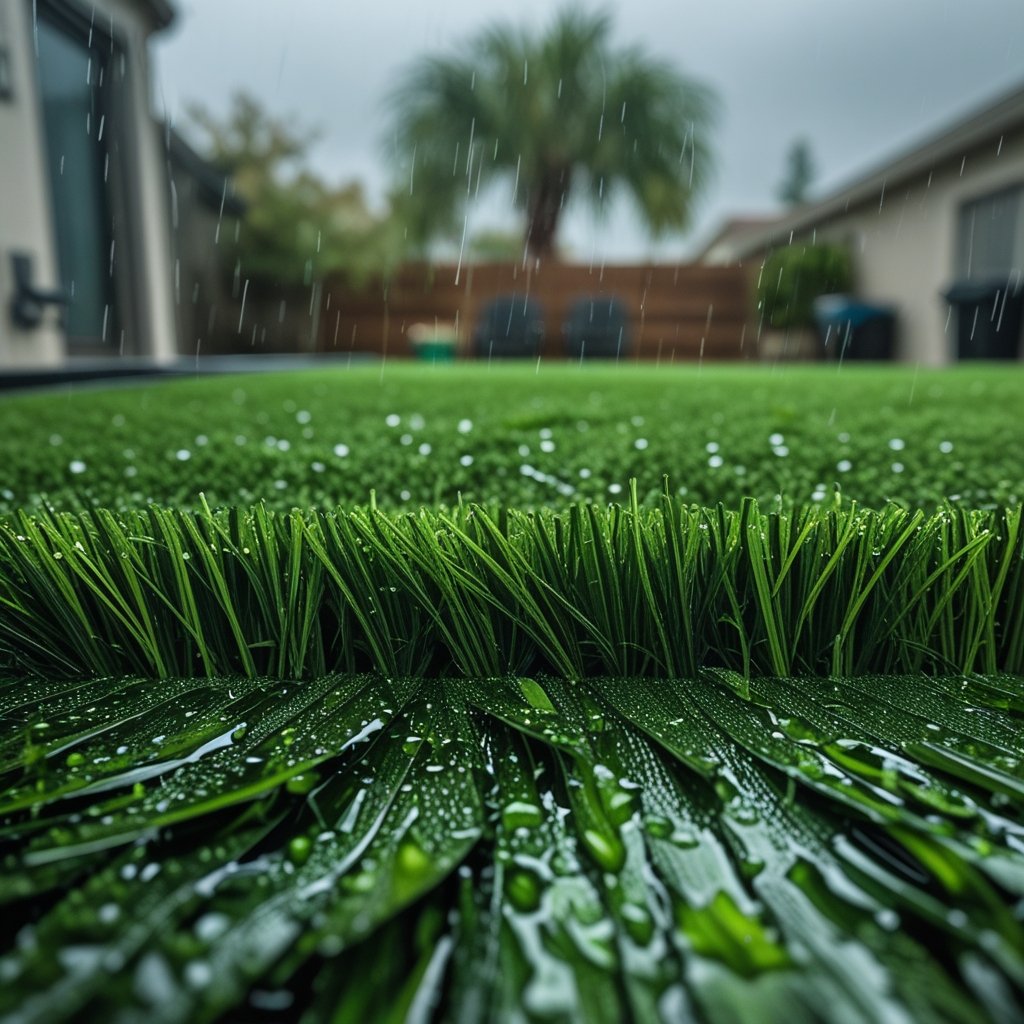
While San Diego winters are mild compared to most of the country, our rainy season from November through March brings unique challenges for artificial turf. The combination of increased rainfall, cooler temperatures, shorter days, and reduced evaporation creates conditions that can promote mold growth, drainage issues, and infill problems if your turf is not properly prepared. Taking some time in late fall to ready your synthetic lawn for winter ensures it performs well throughout the wet months and emerges in great shape for spring.
Drainage Checks Before the Rains
The single most important winter prep task is ensuring your turf drains properly. San Diego storms can deliver significant rainfall in short bursts, and a turf system with compromised drainage will develop standing water, soggy areas, and potential mold issues.
Start by visually inspecting your turf after a light watering with a hose. Water should absorb through the surface within a few minutes across all areas. If you notice pooling or slow-draining spots, these areas likely have compacted infill or blocked backing perforations that need professional attention before the rainy season arrives.
Check the perimeter of your turf installation for soil buildup along the edges. Over the dry summer months, wind and landscaping activities can push soil up against turf borders, creating dams that prevent water from flowing off the surface. Clear any accumulated soil so water can exit freely around all edges.
Ensure that nearby gutters and downspouts direct water away from your turf area. Concentrated water flow from roof drainage can overwhelm localized sections of your turf and erode the base material underneath.
Infill Maintenance for Winter
Infill that has become compacted during the busy summer months needs decompaction before winter. Compacted infill reduces drainage capacity right when you need it most. A professional power brushing in October or November loosens the infill layer and restores proper water permeability.
Check infill levels across your turf. Summer activity often displaces infill from high-traffic areas, leaving thin spots where water can pool and fibers lack support. Topping off infill before winter provides the drainage capacity and fiber support needed to handle rain without issues.
Mold Prevention
San Diego's winter conditions of moisture and moderate temperatures create favorable conditions for mold and mildew growth on artificial turf. Mold is most likely to develop in areas that stay damp, receive limited sunlight, or have accumulated organic debris that feeds fungal growth.
Thorough debris removal is your best mold prevention strategy. Leaves, twigs, flower petals, and other organic material decompose when wet, creating a nutrient-rich layer that mold thrives on. Clear all debris from your turf before the rains start, and continue removing fallen leaves regularly throughout winter.
If your property has areas of turf that receive limited winter sunlight due to the lower sun angle, these zones are at higher risk for mold. Consider trimming back overhanging branches to allow more light penetration during winter months. Even modest increases in sun exposure can significantly reduce mold risk.
Winter Cleaning Schedule
Adjust your cleaning routine for the wet season. During summer, dust and debris are the primary concerns. In winter, moisture management takes priority. Rinse your turf after dry spells of a week or more to prevent dust from hardening into a crust that impedes drainage when rain does come.
After heavy rains, do a walkthrough inspection to identify any drainage problems, displaced infill, or debris accumulation. Address issues promptly rather than waiting for your next scheduled maintenance. Small problems are easy to fix but can become serious if left through multiple storm cycles.
Schedule a professional cleaning in late November or early December, even if your last cleaning was recent. This winter-specific service should include power brushing, infill assessment, drainage testing, and antimicrobial treatment to prevent mold and bacteria during the wet months.
Post-Storm Checklist
After significant storms, inspect your turf for standing water, debris accumulation, edge lifting, and any visible damage. Remove debris quickly to prevent decomposition. If standing water persists for more than an hour after rain stops, note the location and contact your maintenance provider. Check seams and edges for any separation or lifting caused by water movement. With proactive winter preparation and consistent monitoring, your artificial turf will handle San Diego's rainy season with no problems.