Hillside Property Turf Maintenance in San Diego
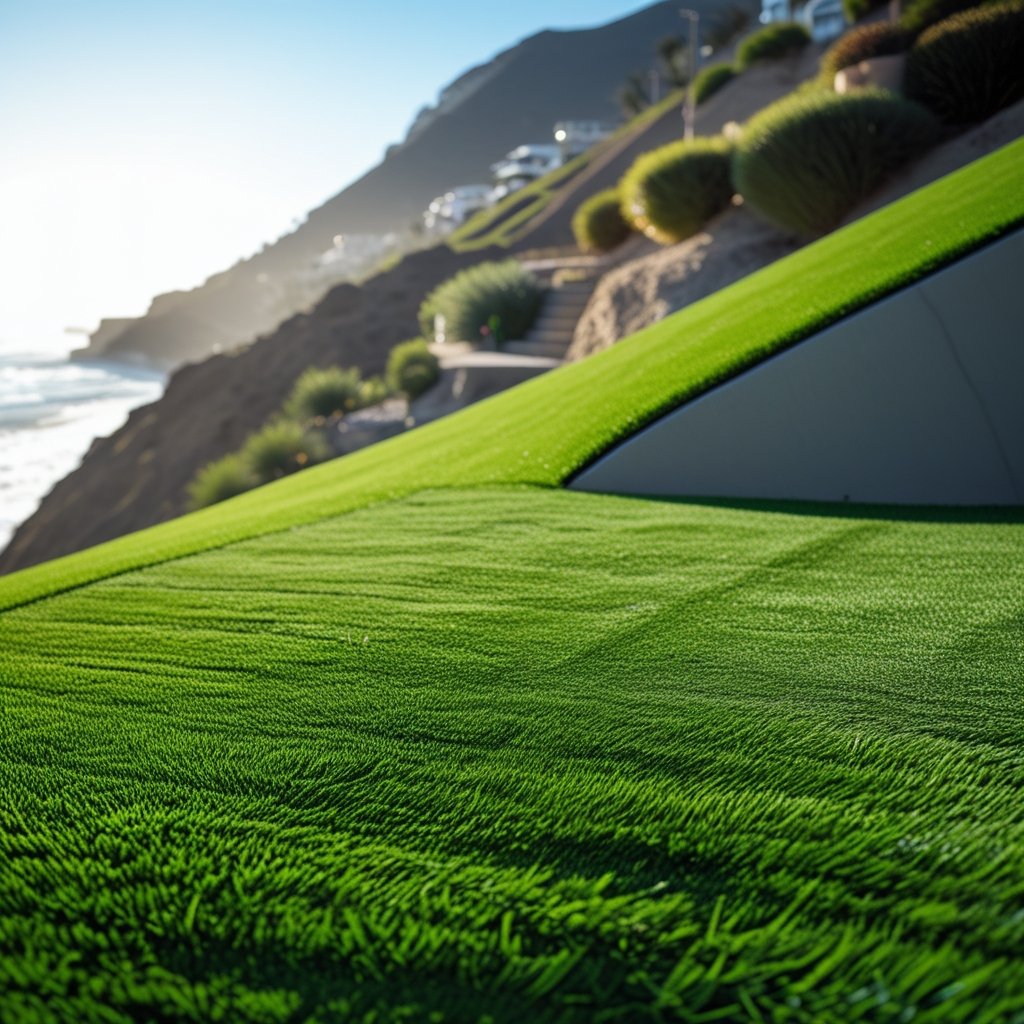
San Diego's topography includes countless hillside properties, from the canyons of Tierrasanta and Scripps Ranch to the slopes of Mount Soledad and the hillsides of La Mesa. Artificial turf on slopes provides erosion control, eliminates the difficulty of mowing on an incline, and delivers a consistently attractive appearance. However, hillside turf installations face specific maintenance challenges related to gravity, water flow, and the physical stresses of sloped terrain that flat installations simply do not encounter.
Slope-Specific Challenges
Gravity is the primary factor that makes hillside turf maintenance different from flat terrain. Everything on a slope tends to move downhill over time: infill, debris, water, and even the turf itself if anchoring is compromised. This constant gravitational pull means that hillside turf requires more frequent attention to issues that flat installations rarely face.
The angle of the slope directly affects the severity of these challenges. Gentle slopes of 10 to 15 percent may experience only modest infill migration. Steeper slopes of 30 percent or more can see significant movement after each rain event or heavy watering. Understanding your slope's grade helps you anticipate maintenance needs and plan an appropriate cleaning schedule.
Drainage on Hills
Water management on hillside turf is both more important and more challenging than on flat ground. Rainwater and cleaning rinse water flow downhill rapidly, potentially carrying infill material and creating channels if the drainage system is not properly maintained. During San Diego's occasional heavy rain events, improperly maintained hillside turf can experience significant infill loss and even undermining of the turf base.
Professional maintenance of hillside turf should include assessment of drainage patterns, identification of any areas where water is concentrating or channeling, and corrective action to redirect flow and protect vulnerable areas. This is particularly important in San Diego, where infrequent but intense rainstorms can deliver large amounts of water in short periods.
Erosion Prevention
One of the primary reasons homeowners install artificial turf on slopes is to prevent erosion. Synthetic turf provides a stable surface cover that protects the soil beneath from wind and water erosion. However, this erosion protection is only effective if the turf system remains intact and properly anchored. Maintenance plays a critical role in ensuring the turf continues to serve its erosion prevention function.
Check the perimeter anchoring regularly, especially along the top and sides of the slope where wind uplift and water infiltration are most likely to cause problems. Any areas where the turf edge has lifted or separated from the ground should be repaired promptly to prevent further deterioration. Professional cleaning visits should include a perimeter inspection as part of the standard service.
Infill Displacement on Slopes
Infill migration is the most common maintenance challenge for hillside turf. Over time, gravity and water flow cause infill to shift from upper areas of the slope to lower areas, creating a gradual imbalance. The upper portion becomes thin and exposed, with fibers lying flat and reduced cushioning. The lower portion accumulates excess infill, potentially blocking drainage and creating an uneven surface.
Regular infill redistribution is essential for hillside properties. During professional cleaning visits, the technician should assess infill depth across the slope and redistribute material from areas of accumulation to areas of depletion. Periodic addition of fresh infill may be necessary more frequently on slopes than on flat terrain to compensate for ongoing downhill migration.
Anchoring Maintenance
Hillside turf installations rely on anchoring systems to hold the turf securely against the slope. These systems may include perimeter nails or stakes, mid-slope anchor points, and in some cases adhesive systems. Over time, soil movement, water infiltration, and the weight of the turf can stress these anchor points. Regular inspection of anchoring integrity is a critical component of hillside turf maintenance.
If you notice any areas where the turf has shifted, buckled, or lifted away from the slope surface, address it promptly. What starts as a small anchoring issue can quickly escalate into a major problem if water gets beneath the turf and begins eroding the base material. Professional maintenance providers experienced with hillside installations will include anchoring assessment in their service routine.
Hillside turf maintenance in San Diego requires more attention than flat installations, but the rewards are well worth the effort. A professionally maintained hillside installation provides lasting erosion control, beautiful aesthetics, and reliable performance for years, protecting both your investment and the stability of your property's terrain.