Using Vinegar Solutions to Clean Artificial Turf
White vinegar has become one of the most popular natural cleaning solutions for homeowners who prefer to minimize chemical use around their families and pets. For artificial turf maintenance, vinegar can be an effective tool when used properly, but it is important to understand both its capabilities and its limitations. This guide will help San Diego turf owners use vinegar solutions effectively while knowing when a stronger approach is needed.
Vinegar as a Natural Cleaner
White distilled vinegar is a mild acid (typically five percent acetic acid) with natural antibacterial and deodorizing properties. It is non-toxic, biodegradable, inexpensive, and safe for use around children and pets. These qualities make it an attractive option for homeowners who want to reduce their use of synthetic chemicals in their outdoor spaces.
On artificial turf, vinegar works well for several common cleaning tasks. It helps neutralize mild odors from pet urine and organic decomposition. It can kill surface-level bacteria and inhibit mold growth on contact. It removes light stains from food, drinks, and organic matter. And it leaves no harmful residues on the turf surface, making it safe for immediate use by children and pets after application.
Proper Dilution Ratios
The correct dilution ratio depends on the cleaning task at hand. For general maintenance and light deodorizing, mix one part white vinegar to one part water. This 50/50 solution is effective for routine cleaning without being overly acidic. For stronger odor issues or light mold treatment, you can use undiluted white vinegar directly on the problem area. However, avoid using undiluted vinegar across large areas, as the stronger acid concentration can affect certain infill materials over time.
For a gentler all-purpose turf cleaner, mix one cup of white vinegar with one gallon of warm water. This milder solution is suitable for weekly surface rinsing and general freshening. You can add a tablespoon of mild dish soap to this mixture for extra cleaning power on greasy or sticky spots. Always use white distilled vinegar, not apple cider vinegar, balsamic, or other varieties, which can stain the turf.
Application Method
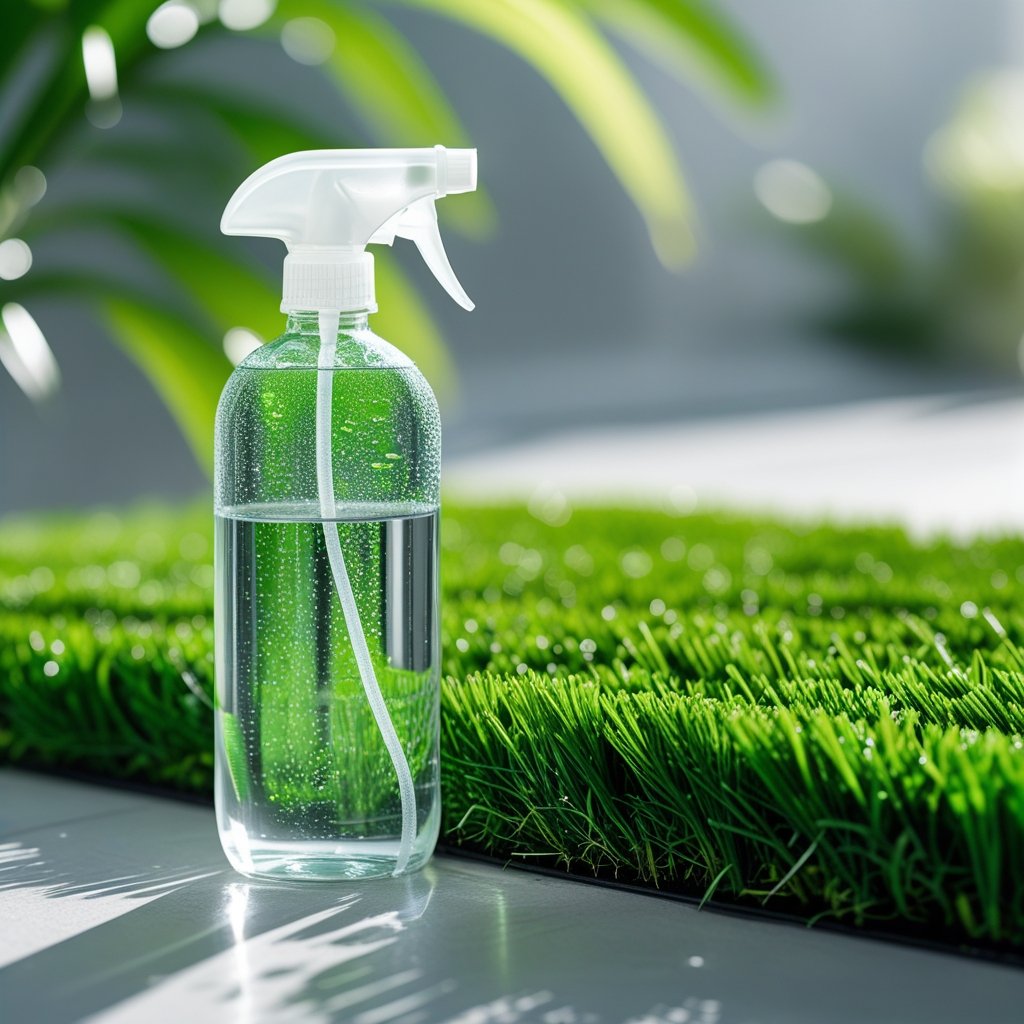
For small spot treatments, pour or spray the vinegar solution directly on the problem area. Let it sit for 15 to 30 minutes to allow the acetic acid to work on bacteria and odor-causing compounds, then rinse thoroughly with clean water. For larger areas, use a garden sprayer to apply the solution evenly across the surface. A pump sprayer allows for controlled, even application without waste.
When treating pet odor areas, saturate the spot thoroughly enough that the solution reaches into the infill where uric acid crystals accumulate. Let it sit for at least 20 minutes, then rinse with a good flow of water to flush the treated contaminants through the drainage system. For mold treatment, apply undiluted vinegar to the affected area, let it sit for 30 minutes, then scrub gently with a soft brush before rinsing.
What Vinegar Can and Cannot Fix
Vinegar is effective for mild to moderate cleaning needs but has significant limitations for more serious turf issues. It works well for light surface odors, minor bacterial contamination, fresh stains, light mold growth, and general freshening between professional visits. For these everyday maintenance tasks, vinegar is an excellent, safe, and economical choice.
However, vinegar cannot break down uric acid crystals from pet urine, which require specialized enzyme treatments. It is not effective against deeply embedded bacterial contamination in the infill layer. It will not remove old, set-in stains that have bonded to the turf fibers. It does not provide residual anti-microbial protection, meaning bacteria will begin regrowing as soon as the vinegar dries. For heavy mold infestations, vinegar may slow the growth but is unlikely to eliminate it completely.
Limitations and When to Use Professionals
Think of vinegar as a maintenance tool rather than a deep cleaning solution. It is excellent for keeping things fresh between professional visits but should not be relied upon as a substitute for professional sanitization. If you are using vinegar regularly and still experiencing persistent odors, visible bacterial growth, or recurring mold issues, these are signs that deeper professional treatment is needed.
San Diego pet owners should be particularly aware of vinegar's limitations. While the vinegar smell may temporarily mask pet odors, it does not address the underlying uric acid crystals that cause persistent ammonia smells. In warm weather, these crystals continue to release odor regardless of how much vinegar you apply. Professional enzyme treatments are the only effective solution for this specific problem. Use vinegar for daily freshening between enzyme treatments, but rely on professionals for the deep deodorizing that actually solves the problem at its source.