UV Protection for Artificial Turf in San Diego
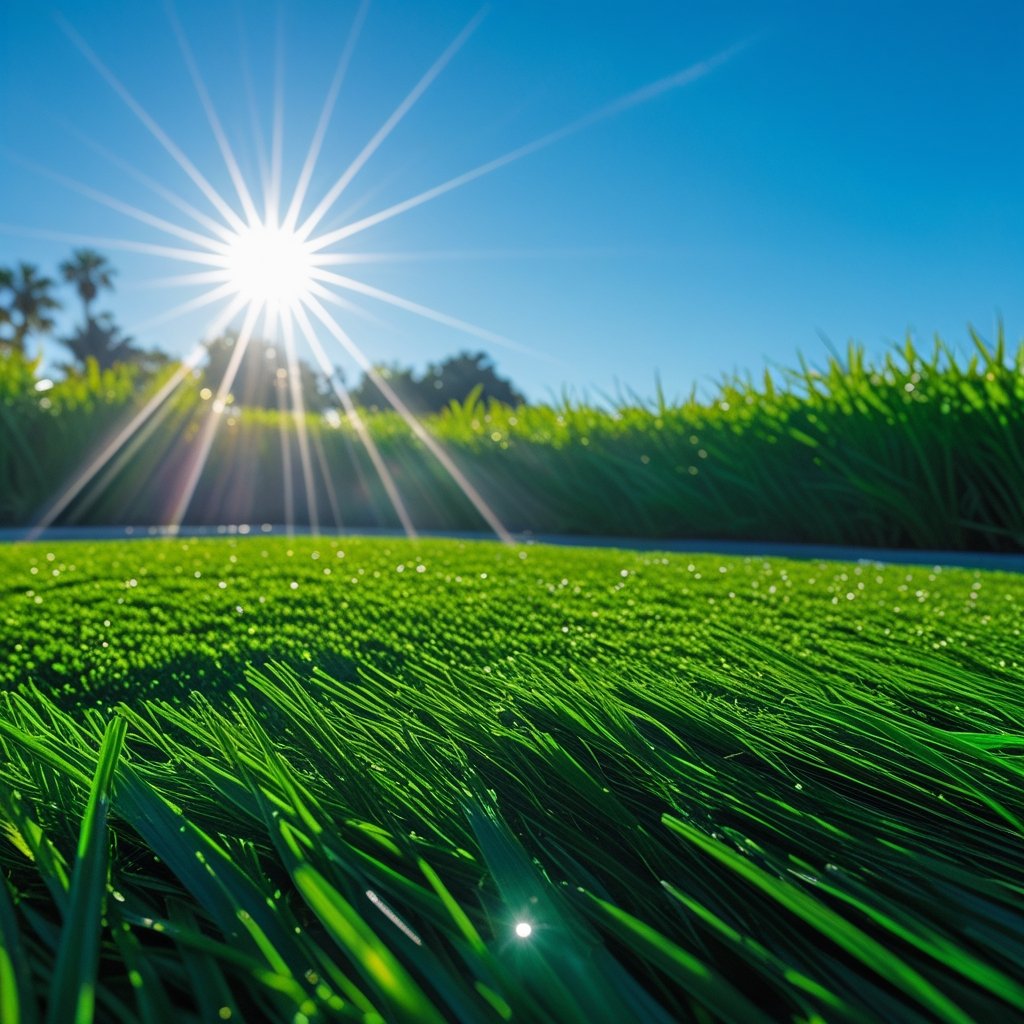
San Diego averages more than 260 sunny days per year, making it one of the sunniest cities in the country. While this climate is ideal for outdoor living and a major reason many homeowners choose artificial turf, all that sunshine means your synthetic lawn is exposed to significant ultraviolet radiation throughout the year. Understanding how UV affects your turf and what you can do to mitigate its impact will help you get the maximum lifespan from your investment.
How UV Affects Artificial Turf
Ultraviolet radiation from the sun breaks down polymer chains in synthetic materials over time. This process, called photodegradation, affects all plastics and synthetics to varying degrees. In artificial turf, UV exposure can cause fiber fading, where the vibrant green color gradually shifts to a washed-out or yellowish tone. It also reduces fiber flexibility, making blades more brittle and prone to breaking rather than bending under pressure. Over extended periods, UV damage weakens the turf backing material, potentially leading to tears and seam failures.
The rate of UV degradation depends on several factors including the quality of the turf material, the UV stabilizers incorporated during manufacturing, the intensity and duration of sun exposure, and how well the turf is maintained. San Diego's latitude and clear skies mean UV intensity here is higher than in most of the country, making UV protection particularly important for local homeowners.
UV Stabilizers in Modern Turf
Reputable turf manufacturers incorporate UV stabilizers into their fibers during the extrusion process. These chemical additives absorb UV radiation and convert it to harmless heat, preventing the UV energy from breaking down the polymer structure. The most common UV stabilizers used in turf include hindered amine light stabilizers, or HALS, which are highly effective at protecting polyethylene and polypropylene fibers.
Higher-quality turf products contain higher concentrations of UV stabilizers and carry longer warranties against fading and degradation. When selecting artificial turf for a San Diego installation, investing in a product with strong UV protection specifications is well worth the premium. Look for turf rated for over 3,000 hours of UV exposure in accelerated testing, which translates to roughly eight to ten years of real-world San Diego sun exposure before significant degradation occurs.
Maintenance to Prevent Fading
While UV stabilizers do the heavy lifting in protecting your turf from sun damage, proper maintenance plays a supporting role. Keeping your turf clean removes debris and contaminants that can interact with UV radiation to accelerate degradation. Organic debris trapped in turf fibers can create hot spots that intensify UV damage in localized areas.
Regular rinsing helps keep fibers cool and free of mineral deposits. Dust and fine particles that accumulate on fiber surfaces can act as tiny magnifying lenses, concentrating UV energy on small areas of the fiber. A monthly rinse with a garden hose removes these particles and helps fibers maintain their protective coating.
Infill maintenance is important because properly supported fibers experience less stress. Fibers that are bent or matted due to inadequate infill support are more vulnerable to UV-induced cracking and breakage. Keeping infill levels optimal ensures fibers can flex naturally and absorb UV radiation across their full surface area rather than concentrating stress at bend points.
Additional Protection Strategies
Strategic shade placement can significantly reduce UV exposure on portions of your turf. Shade sails, pergolas, umbrellas, and trees positioned to block afternoon sun in the summer months provide meaningful protection for the areas beneath them. Even partial shade during peak UV hours between 10 a.m. and 3 p.m. can extend turf lifespan considerably.
Some homeowners in San Diego apply UV protectant sprays designed for outdoor synthetic materials. While these products can provide a modest additional layer of protection, they need regular reapplication and should be tested on a small area first to ensure they do not alter the turf's appearance or feel. Consult with your turf manufacturer before applying any aftermarket treatments.
When to Seek Professional Help
If you notice significant color fading, increased fiber shedding, or brittleness in your turf fibers, these are signs that UV degradation is advancing. A professional assessment can determine whether the damage is surface-level and manageable with enhanced maintenance, or whether sections may need replacement. Early intervention often extends the serviceable life of UV-stressed turf by years, making regular professional inspections a smart investment for San Diego homeowners.