The Turf Sanitization Process Explained
Sanitization is one of the most important services your artificial turf can receive, yet it is also one of the least understood by homeowners. Many people confuse sanitization with general cleaning, but they are fundamentally different processes with different goals. While cleaning removes visible dirt, debris, and surface contamination, sanitization targets the invisible threats: bacteria, viruses, mold spores, and other pathogens that thrive in the warm, moist environment within your turf's infill layer. Here is a detailed look at what professional turf sanitization involves and why it matters for your San Diego home.
Step-by-Step Sanitization Process
Professional turf sanitization follows a precise sequence designed to maximize effectiveness while protecting the turf system and ensuring safety for the household. Each step builds on the previous one, and skipping steps compromises the final result.
The process begins with surface preparation. All visible debris is removed using commercial blowers and hand tools. Solid waste, leaves, and large debris must be cleared before any liquid treatments are applied. The surface is then pre-rinsed to moisten the infill and remove loose dust and pollen. This pre-rinse helps subsequent treatments penetrate the infill evenly rather than being absorbed unevenly by dry spots.
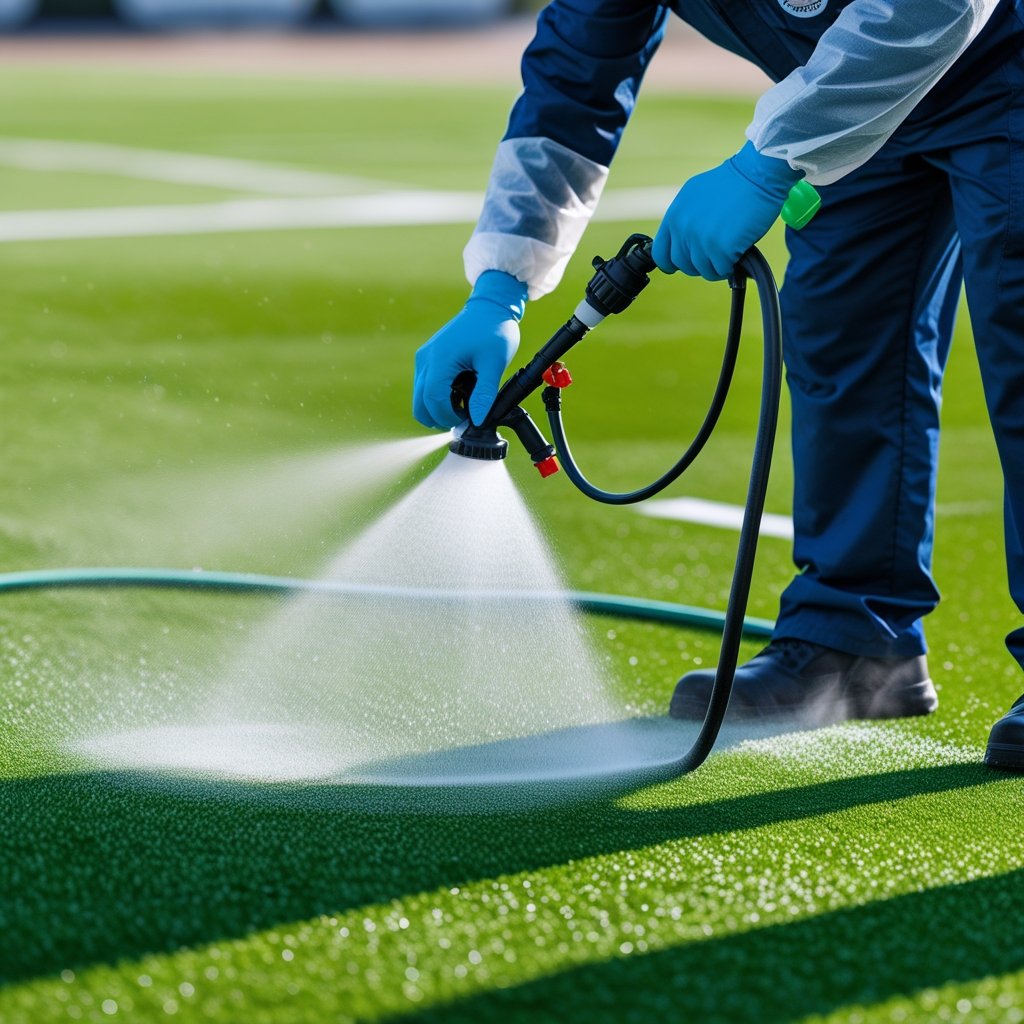
Next comes the enzyme treatment phase. Professional-strength enzyme solution is applied across the entire surface at a volume calculated to saturate the infill layer. The enzymes begin breaking down organic contamination including uric acid crystals, decomposed organic matter, and protein-based waste. This phase typically requires two to four hours of contact time to be fully effective. During this period, the enzymes work through the full depth of the infill.
After the enzyme contact period, the surface is thoroughly rinsed to flush away dissolved contaminants and enzyme byproducts. This intermediate rinse is critical because the next step, antimicrobial treatment, works best on surfaces free of organic interference.
The antimicrobial sanitization phase follows the rinse. A professional-grade antimicrobial solution is applied evenly across the entire turf surface. This product is selected for its broad-spectrum effectiveness against bacteria, viruses, and fungi while being safe for subsequent contact by pets and children after drying. The antimicrobial agent penetrates the infill to reach pathogens at every level of the turf system.
The final step is a light rinse and quality check. The technician inspects the entire surface for any areas that may need additional treatment, verifies even coverage, and ensures the surface is draining properly.
Products Used
Professional turf sanitization products are specifically formulated for outdoor synthetic surfaces. Enzyme cleaners contain targeted biological catalysts that break down organic waste at the molecular level. Antimicrobial solutions use active ingredients that disrupt pathogen cell membranes without leaving harmful residues. The specific products vary by provider, but quality professional services use hospital-grade or veterinary-grade antimicrobials that have been tested and verified for both effectiveness and safety.
Products used by reputable turf cleaning services carry safety data sheets documenting their ingredients, safe handling, and environmental impact. At Turf Cleaning SD, we are transparent about the products we use and happy to share product information with any client who asks.
Bacteria Elimination Rates
Professional sanitization treatments achieve high pathogen reduction rates on treated surfaces. Quality antimicrobial products used at proper concentrations and contact times eliminate the vast majority of common bacteria including E. coli, staphylococcus, salmonella, and other pathogens commonly found on outdoor surfaces. The exact reduction rates depend on the product, concentration, contact time, and the initial contamination level.
It is important to understand that sanitization is not sterilization. The goal is to reduce pathogen levels to safe thresholds, not to create a completely sterile environment. Outdoor surfaces are continuously recontaminated by the environment, which is why regular sanitization on a scheduled basis is more effective than a single treatment.
Drying Time
After sanitization, the turf surface needs time to dry before it is safe for use by pets and children. In San Diego's typically warm, dry climate, drying time ranges from one to three hours depending on the season, time of day, and whether the turf is in sun or shade. Summer treatments may dry in as little as 30 to 60 minutes, while winter treatments in shaded areas may take longer.
Safety for Pets and Children
Once fully dry, professionally sanitized turf is completely safe for contact by pets, children, and adults. The products break down into harmless compounds during the drying process, leaving no toxic residues on the surface. We always advise clients to keep pets and children off the turf until it is visibly dry as a standard safety precaution. This waiting period also ensures maximum treatment effectiveness, as foot traffic during the wet phase can disrupt the antimicrobial contact time needed for optimal pathogen reduction.