Turf Drainage Maintenance: Preventing Water Buildup in San Diego
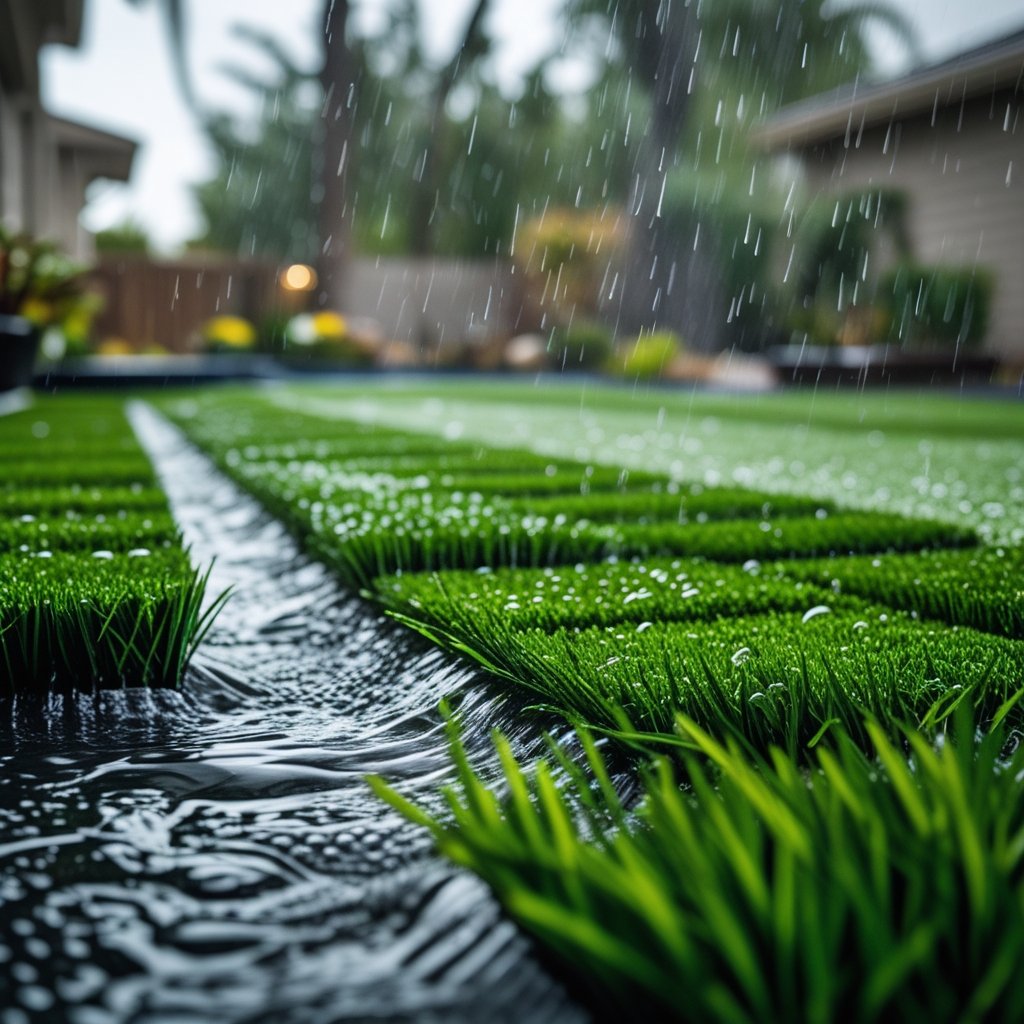
One of the greatest advantages of artificial turf is that it does not turn into a muddy mess when it rains. A well-installed and properly maintained synthetic lawn drains quickly and is ready to use shortly after a storm passes. However, drainage performance can decline over time if the system is not properly maintained. For San Diego homeowners, understanding turf drainage is especially important given the concentrated rainfall we receive during winter months.
How Turf Drainage Works
Artificial turf drainage is a multi-layered system. Water first passes through the turf fibers and infill layer. It then moves through small perforations in the turf backing, typically spaced every few inches across the entire surface. Below the backing, a layer of crushed aggregate or decomposed granite provides a permeable base that allows water to flow downward and outward, away from the surface. The base layer is graded during installation to direct water toward drainage exits at the edges of the installation.
Each layer plays a role, and a problem at any level can compromise overall drainage performance. Regular maintenance ensures all layers continue working together as designed.
Common Drainage Problems
The most frequent drainage issue is infill compaction. Over time, foot traffic, pet activity, and the weight of the infill itself cause it to pack down tightly. Compacted infill restricts the flow of water through the surface layer, causing it to pool on top. This is the easiest drainage problem to fix, requiring only professional power brushing and possible infill replenishment.
Blocked perforations in the turf backing are another common issue. Dirt, organic debris, and mineral deposits can clog the small drainage holes, slowing water penetration. Professional cleaning with appropriate equipment clears these blockages and restores proper flow.
Base material shifting or settling is a more serious problem. If the aggregate base beneath the turf develops low spots, water will collect in those areas regardless of how clean the surface layer is. This type of issue may require lifting the turf to regrade the base.
San Diego Rain Season Considerations
San Diego receives the vast majority of its annual rainfall between November and March. While our total rainfall is modest compared to other regions, storms can deliver heavy bursts that test any drainage system. Preparing your turf for the rainy season is essential to avoid problems during winter weather.
Before the rains begin, have your turf professionally cleaned and power brushed. This decompacts the infill and clears any surface debris that could impede drainage. Check the edges of your turf installation for soil buildup that could block water from flowing off the surface. Clear any nearby gutters and downspouts to prevent concentrated water flow onto your turf area.
Signs of Drainage Issues
Knowing what to look for helps you catch drainage problems early. Water that remains on the surface more than 30 minutes after rain stops is a clear indicator. Soft, spongy areas that feel different from the rest of the turf may indicate subsurface water retention. A musty or mildew smell, especially after wet weather, suggests moisture is being trapped somewhere in the system. Visible mold or algae growth on the turf surface is a definitive sign that water is not draining properly.
Maintenance Steps for Better Drainage
Several maintenance tasks directly support good drainage. Regular power brushing, performed every three to four months, prevents infill compaction and maintains permeability. Prompt debris removal keeps organic material from decomposing on the surface and clogging drainage paths. Periodic rinsing with a garden hose helps flush fine particles through the system before they accumulate. Edge maintenance ensures water has clear exit paths around the perimeter of your turf.
For pet owners, regular enzyme treatments serve double duty. They break down uric acid crystals that can contribute to infill compaction and drainage restriction while also eliminating odors.
Professional Solutions
If you are experiencing persistent drainage issues despite regular maintenance, a professional assessment is the best next step. Technicians can identify whether the problem is surface-level, within the infill, at the backing, or in the base layer. Solutions range from simple decompaction and cleaning to more involved repairs like base regrading or additional drainage installation. Addressing drainage problems promptly prevents secondary issues like mold growth, odor development, and accelerated turf degradation.