Summer Heat and Artificial Turf: Tips for San Diego
San Diego summers bring plenty of sunshine and warmth, which is great for outdoor living but can pose some challenges for artificial turf. Synthetic grass absorbs and retains heat differently than natural grass, and surface temperatures can climb significantly on hot days. Understanding how heat affects your turf and what you can do about it will help you enjoy your outdoor spaces all summer long without worrying about damage, discomfort, or unpleasant odors.
How Heat Affects Artificial Turf
On a typical San Diego summer day with air temperatures in the mid-80s, artificial turf surface temperatures can reach 120 to 150 degrees Fahrenheit in direct sunlight. This is noticeably warmer than natural grass, which stays cooler through evapotranspiration. While modern turf products are engineered to handle high temperatures without degrading, the heat can make the surface uncomfortable for bare feet and can intensify odors from pet waste or organic debris.
Prolonged exposure to extreme heat can also affect infill performance. Some infill materials expand slightly in high temperatures, and repeated heating and cooling cycles can contribute to compaction over time. The turf fibers themselves are UV-stabilized and designed to withstand San Diego's sun, but heat stress over many years can gradually reduce their resilience if maintenance is neglected.
Cooling Strategies That Work
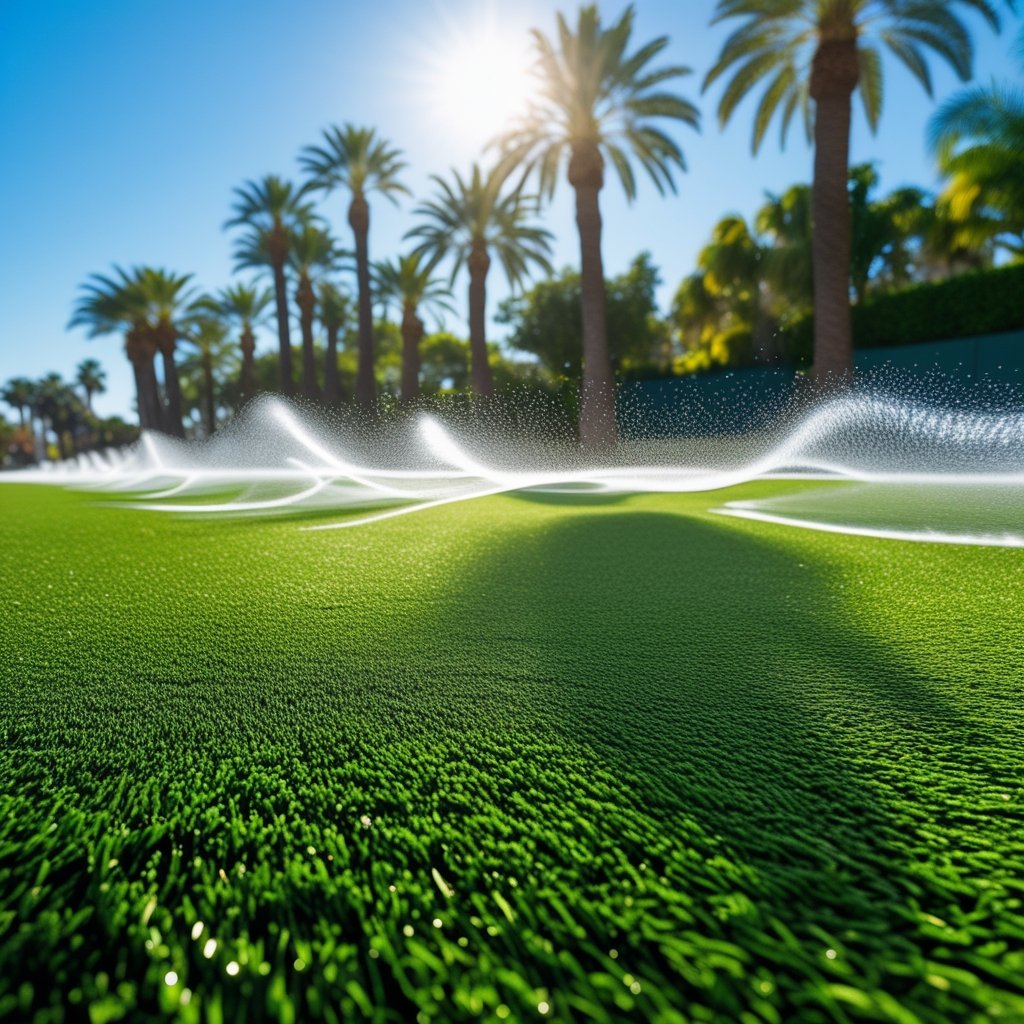
The simplest and most effective way to cool your artificial turf is to rinse it with water. A light spray from your garden hose can drop the surface temperature by 30 to 50 degrees almost immediately. This effect is temporary, lasting about 30 to 60 minutes depending on sun exposure, but it makes a significant difference when you want to use the space. For the best results, rinse the turf shortly before you plan to go outside.
Strategic shade placement also helps tremendously. Shade sails, patio umbrellas, pergolas, and strategically planted trees can block direct sunlight from hitting sections of your turf during the hottest parts of the day. Even partial shade can reduce surface temperatures by 20 to 40 degrees. If you are planning any landscape upgrades, consider adding shade elements that protect your most-used turf areas from afternoon sun.
Odor Management in Hot Weather
Heat amplifies odors, and this is one of the biggest summer complaints from artificial turf owners, especially those with pets. When temperatures rise, ammonia gases from accumulated pet urine become volatile and the smell can become strong and persistent. The key to odor management in summer is staying ahead of the problem with consistent maintenance.
Rinse pet waste areas daily during summer months rather than waiting for your regular cleaning schedule. Consider increasing the frequency of professional enzyme treatments during June through September. These enzyme-based solutions break down the uric acid crystals that cause persistent odors at the molecular level, providing longer-lasting freshness than rinsing alone. Many San Diego pet owners find that switching from quarterly to bi-monthly professional cleanings during summer makes a dramatic difference.
Pet Safety During Summer
Your pets feel the heat on their paws just as you feel it on your bare feet. Before letting your dog out onto the turf during hot afternoons, test the surface temperature with the back of your hand. If it is too hot for your hand, it is too hot for your pet's paws. Schedule outdoor time for early morning or evening when the turf has cooled down, and always provide access to shaded areas and fresh water.
Consider creating a shaded relief area on your turf where your pet can go during the hottest hours. A simple shade structure over a portion of the turf can make that zone comfortable even on the warmest days. Some pet owners also install a misting system near the turf area to keep temperatures manageable throughout the day.
Summer Maintenance Essentials
Beyond cooling and odor management, summer is the time to stay on top of basic maintenance. Brush high-traffic areas weekly to prevent fiber matting, which can worsen during summer when the turf is used more frequently. Keep the surface clear of food and drink debris from outdoor gatherings, as organic matter decomposes faster in heat and can attract insects.
Schedule a mid-summer professional cleaning to reset your turf before the second half of the season. This visit should include sanitization, deodorizing, and a quick grooming pass to address any wear from increased summer use. By staying proactive with your maintenance during the hot months, you can keep your artificial turf looking, smelling, and feeling great all the way through October.