Spring Cleaning Checklist for Your Artificial Turf
As San Diego transitions from the rainy season into the warm, dry months, spring is the ideal time to give your artificial turf a thorough refresh. Winter rains, wind-blown debris, and reduced outdoor activity during cooler months all take a toll on your synthetic lawn. A comprehensive spring cleaning restores your turf's appearance, addresses any issues from winter weather, and sets you up for a season of enjoyable outdoor living. Here is your complete spring cleaning checklist.
Post-Winter Debris Cleanup
Start with a thorough debris removal. Winter storms deposit leaves, small branches, seed pods, and other organic material across your turf. Decomposing debris left over from the wet months can stain fibers and create conditions for mold. Use a leaf blower on a low setting to clear loose debris from the entire surface. Work from the center outward to push material off the edges.
Pay special attention to corners, edges, and areas near fences or walls where wind tends to concentrate debris. These sheltered zones often accumulate the most material over winter and may need hand clearing in addition to blowing.
Pollen Removal
San Diego's spring brings heavy pollen production from trees, flowers, and grasses throughout the region. Pollen settles on every outdoor surface, and your artificial turf is no exception. A yellow-green dusting of pollen not only looks unattractive but can trigger allergies for family members who use the turf. Pollen also works its way into the infill layer where it decomposes and contributes to compaction.
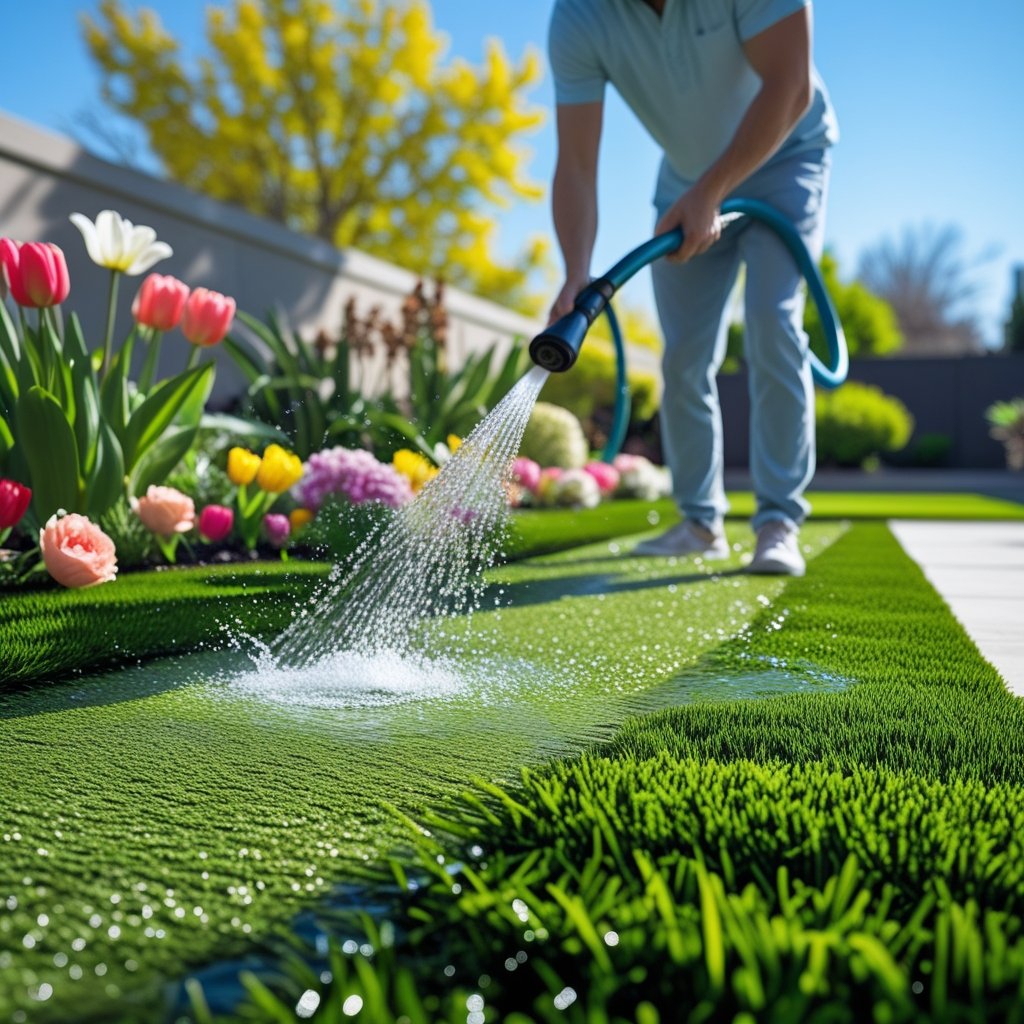
Rinsing your turf with a garden hose effectively removes surface pollen. For heavy accumulation, a moderate-pressure rinse across the entire surface flushes pollen through the drainage system. Repeat this weekly during peak pollen season, typically March through May in San Diego, to keep your turf clean and allergen levels low.
Drainage Assessment
After a full rainy season, it is important to verify that your drainage system is functioning properly. Use your garden hose to simulate rainfall across different sections of your turf. Water should absorb through the surface within a few minutes. Any areas that drain noticeably slower than others may have compacted infill, blocked perforations, or subsurface issues that developed during winter.
Note any areas where you observed standing water during winter storms. These spots deserve professional attention even if they appear to drain adequately during your spring test. Winter drainage problems that go unaddressed tend to worsen over time and can cause structural damage to the turf system.
Infill Level Check
Winter rain can wash infill from areas of your turf, particularly on slopes or near drainage edges. Walk across your entire turf surface and feel for areas that seem thin, hard, or uneven. Look for spots where the turf backing is visible through the fibers. These areas need infill replenishment to restore proper fiber support and drainage.
High-traffic zones often lose infill faster than other areas, so pay particular attention to pathways, play areas, and spots near doors. If multiple areas need infill, a professional service visit is the most efficient way to assess and address the issue comprehensively.
Fiber and Surface Inspection
Inspect your turf for signs of winter damage. Look for seam separation, edge lifting, wrinkles, or any areas where the turf has shifted. Check fibers for matting, especially in areas that stayed damp throughout winter or received limited sunlight. Note any discoloration, which could indicate mold or staining from decomposed organic material.
Test fiber resilience by pressing down on the turf in several locations and observing how quickly fibers spring back. Areas where fibers stay flat indicate the need for power brushing and possibly infill replenishment.
Professional Spring Service Benefits
While you can handle basic spring cleanup yourself, a professional spring service provides a level of restoration that DIY methods cannot match. Professional service includes deep power brushing to lift all fibers and decompact infill, thorough sanitization to eliminate any bacteria or mold that established during winter, infill assessment and replenishment as needed, and a comprehensive inspection of seams, edges, and backing integrity.
Scheduling professional service in early to mid-spring ensures your turf is in peak condition for the months when you use it most. At Turf Cleaning SD, our spring service is designed specifically for the post-winter needs of San Diego turf, addressing every aspect of seasonal recovery to give your lawn a fresh start.