Spot Cleaning Stains on Artificial Turf
One of the great advantages of artificial turf is its resistance to permanent staining. Most common spills and messes can be cleaned up completely if addressed promptly and with the right approach. San Diego homeowners who use their outdoor spaces for dining, entertaining, and family activities will inevitably face stains on their synthetic lawn. Knowing how to handle each type of stain quickly and effectively saves time, prevents damage, and keeps your turf looking spotless.
General Spot Cleaning Principles
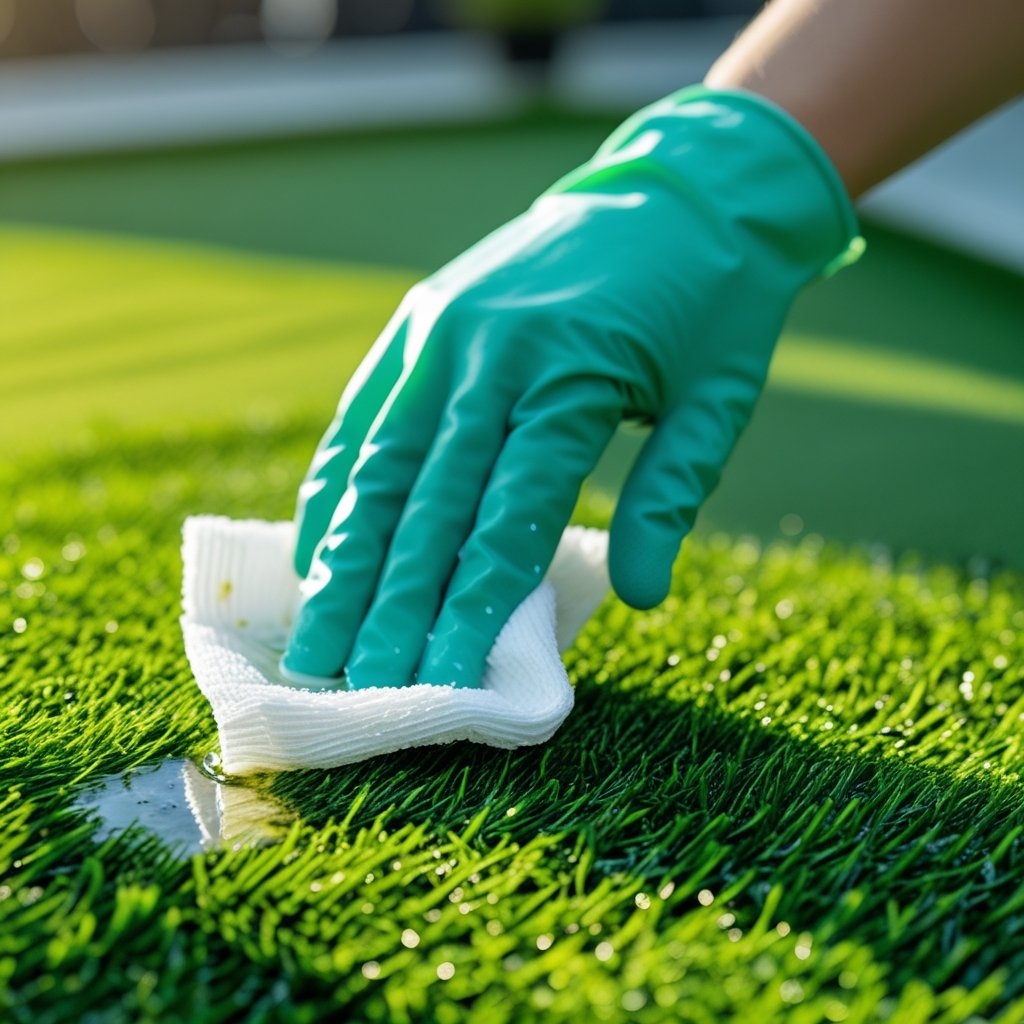
Before diving into specific stain types, there are several universal principles that apply to all spot cleaning on artificial turf. First, speed matters. The sooner you address a stain, the easier it is to remove. Fresh stains sit on the surface and in the top layer of infill, while old stains can bond to the fibers and penetrate deeper. Second, always blot rather than rub. Rubbing spreads the stain to a larger area and can push it deeper into the infill. Third, work from the outside of the stain inward to prevent spreading.
For any stain, start with the mildest cleaning approach and escalate only if needed. Begin with plain water, move to a mild soap solution, and only use stronger products if the simpler methods fail. This approach protects your turf from unnecessary chemical exposure while still getting the job done effectively.
Food Stains
Food is one of the most common stain sources on residential turf, especially during San Diego's year-round outdoor dining and entertaining season. For most food spills, including ketchup, mustard, salsa, and other sauces, scrape up any solid material first using a plastic utensil or spatula. Then blot the area with a cloth dampened with warm water and a small amount of mild dish soap. Rinse thoroughly with clean water after the stain is removed.
Greasy food spills like butter, cooking oil, or fatty meats require a slightly different approach. After removing solid material, apply a small amount of mineral spirits or a grease-cutting dish soap directly to the stain. Let it sit for a few minutes to break down the oil, then blot with a clean cloth. Follow with a thorough water rinse. For stubborn grease stains, you may need to repeat the process two or three times.
Drink Stains
Beverage spills are virtually inevitable at outdoor gatherings. Coffee, tea, red wine, fruit juice, and soda can all leave visible marks on artificial turf if not cleaned promptly. For most drink spills, blot up as much liquid as possible immediately, then rinse the area with warm water. If a stain remains, apply a solution of warm water and mild dish soap, let it sit for a few minutes, then blot and rinse.
Red wine and dark-colored drinks are the most challenging beverage stains. For these, after blotting up the excess, apply a solution of one part white vinegar to two parts warm water. Let it sit for 15 to 20 minutes, then blot and rinse. Club soda applied immediately to a wine spill can also be effective. If the stain persists after home treatment, a professional can use specialized stain removal products that are safe for turf fibers.
Grease and Oil Stains
Grease from barbecues, automotive oil, and similar petroleum-based substances require careful treatment. These substances can bond to synthetic turf fibers if left untreated, and they may damage certain infill materials. For fresh grease or oil spills, absorb as much as possible with paper towels or an absorbent material like cat litter. Then apply a small amount of mineral spirits to a clean cloth and blot the stain gently.
Avoid pouring mineral spirits or other solvents directly onto the turf, as they can damage the backing and affect the infill. Always apply to a cloth first and work the stain from the outside in. After removing the grease, clean the area with warm soapy water to remove any solvent residue, then rinse thoroughly with clean water. For large or stubborn grease stains, professional treatment is recommended to avoid damaging the turf.
Mud Stains
Mud is one of the easiest stains to deal with on artificial turf, but patience is key. Rather than trying to clean wet mud, let it dry completely first. Dried mud brushes off easily with a stiff-bristle broom and the residue can be rinsed away with water. Attempting to clean wet mud typically smears it across a larger area and pushes it deeper into the fibers, making the problem worse.
After removing dried mud, rinse the area to flush any remaining particles from the infill. If mud stains persist after this treatment, a mild soap and water solution applied with a sponge will handle any remaining discoloration. Mud stains on artificial turf almost never require professional treatment if handled correctly.
When Stains Need Professional Attention
Some stains are beyond the scope of DIY treatment. Paint, permanent marker, heavy rust, and chemical stains may require professional products and techniques to remove safely. Old stains that have had time to bond deeply with the turf fibers are also more difficult to remove at home. If you have attempted home treatment without success, contact a professional rather than escalating to harsher chemicals that could damage your turf. Professional stain removal is a targeted service that addresses the specific stain type without risking harm to the surrounding turf surface.