Protecting Your Turf from Santa Ana Winds
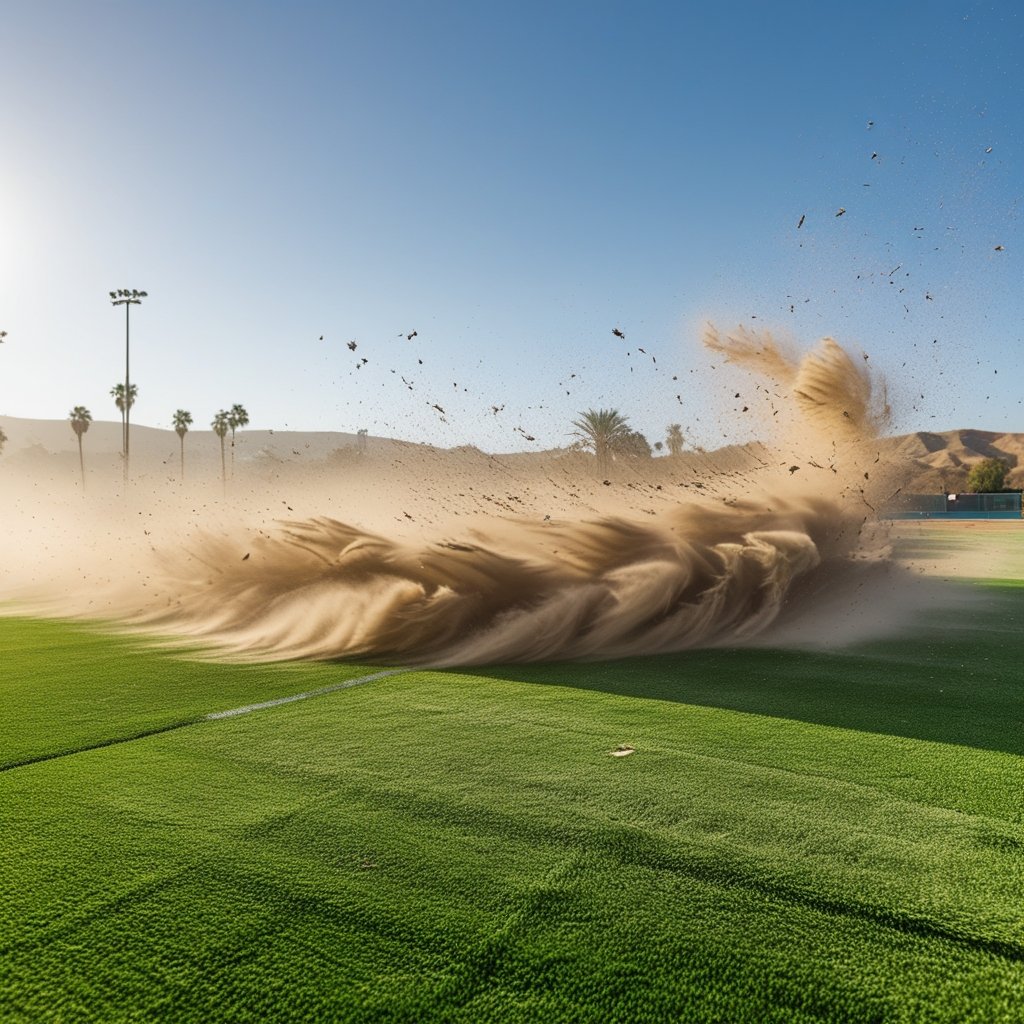
Santa Ana winds are a defining feature of Southern California's climate, and San Diego residents know them well. These hot, dry winds blow from the inland deserts toward the coast, often reaching sustained speeds of 40 to 60 miles per hour with gusts exceeding 80 mph. For artificial turf owners, Santa Ana events present unique challenges including dust accumulation, debris damage, infill displacement, and stress on edges and seams. Knowing how to prepare for and recover from these wind events will help protect your investment.
How Santa Ana Winds Affect Your Turf
The primary impact of Santa Ana winds on artificial turf is the massive amount of fine dust and debris they carry. These winds pick up sand, dirt, and particulate matter from the desert and deposit it across coastal communities. A single Santa Ana event can coat your turf with a visible layer of fine dust that works its way into the infill and clings to the fibers. This dust buildup can cause discoloration, reduce drainage efficiency, and create an abrasive layer that accelerates fiber wear.
Strong winds also blow larger debris across your property, including branches, leaves, seed pods, and even small rocks or gravel from neighboring landscapes. These items can land on your turf with force, potentially damaging fibers or scratching the surface. In severe wind events, lightweight items like patio furniture or garden decorations can become projectiles that cause more significant damage to turf surfaces.
Dust and Debris Management
After a Santa Ana wind event, your first priority should be removing the accumulated dust and debris from your turf. Start by carefully removing any large debris by hand, checking for any damage to the turf surface as you go. Next, use a leaf blower on a moderate setting to clear lighter debris and surface dust. Finally, give the entire turf surface a thorough rinse with your garden hose to wash away the fine dust that has settled into the fibers and infill.
For heavy dust accumulation after a prolonged Santa Ana event, a single rinse may not be sufficient. You may need to rinse, let the surface dry, and then rinse again to fully clear the dust. Pay special attention to corners and edges where wind-driven debris tends to accumulate. If the dust is particularly heavy, consider scheduling a professional cleaning to ensure thorough removal from the infill layer.
Post-Wind Cleanup Best Practices
Once the wind dies down, do a careful inspection of your entire turf surface. Walk the perimeter and check all edges and seams for any signs of lifting, peeling, or separation. Strong winds can catch exposed edges and begin pulling the turf away from its anchoring. If you find any lifted edges, secure them temporarily with landscape stakes and schedule a professional repair before the next wind event.
Check for any foreign objects that may have blown onto your turf, including sharp items that could damage the surface if walked on. Broken branches, nails from construction debris, and shattered plant pots are common post-wind hazards. A thorough visual inspection prevents accidental injuries and identifies any damage that needs repair.
Edge and Seam Protection
The edges and seams of your artificial turf are the most vulnerable points during high winds. If your turf installation includes exposed edges that are not secured by hardscaping like concrete borders, pavers, or landscape edging, these can be caught by wind and lifted. Before Santa Ana season, inspect all edges to ensure they are properly secured and that no sections have begun to work loose.
Seams between turf panels can also be stressed by wind, especially if the turf surface ripples or billows during gusts. While a properly installed turf system should resist moderate wind, older installations or those with compromised seam tape may show weakness during strong Santa Ana events. If you notice any seam separation, even minor, have it repaired promptly before it worsens.
Infill Displacement Prevention
In extremely strong winds, infill material can be displaced from exposed areas of your turf, particularly along edges and in areas where the turf fibers have become flattened. Maintaining your infill at the proper level and keeping your turf fibers upright through regular grooming helps prevent wind from accessing and moving the infill.
If you find areas where infill has been noticeably thinned after a wind event, do not wait to address it. Exposed turf backing without adequate infill is more vulnerable to UV damage and further wind displacement. A professional infill top-off after a severe Santa Ana event ensures your turf maintains its structural integrity and is ready for the next wind event. San Diego typically experiences Santa Ana winds from September through May, so maintaining your turf through this extended season is an ongoing priority.