How to Remove Dog Urine Odor from Artificial Turf
If you have a dog and artificial turf, chances are you have encountered the persistent ammonia smell that builds up over time. Unlike natural grass, where soil microorganisms break down urine naturally, synthetic turf traps urine compounds in its infill and backing layers. In San Diego's warm climate, these odors can become particularly intense during summer months. The good news is that with the right approach, you can completely eliminate urine odors and keep your turf smelling fresh.
Why Urine Smells Persist
When your dog urinates on artificial turf, the liquid passes through the fibers and into the infill layer. While some urine drains through the backing, a significant portion remains trapped in the infill material. As the water component evaporates, uric acid crystals are left behind. These microscopic crystals are the primary source of persistent urine odor on artificial turf.
Uric acid crystals are remarkably stable. They resist breakdown by water alone, meaning that simply rinsing your turf does not eliminate the odor source. The crystals remain dormant when dry, but as soon as moisture and warmth return, whether from rain, morning dew, or San Diego's humidity near the coast, the crystals release ammonia gas. This is why turf can smell fine on a dry, cool morning and become overwhelmingly pungent on a warm, humid afternoon.
Over time, uric acid crystals accumulate, and each new layer of urine adds to the problem. Without proper treatment, the concentration builds to a point where the odor is persistent regardless of weather conditions.
Home Remedies and Their Limitations
Many homeowners try various home remedies before seeking professional help. Vinegar and water solutions can temporarily mask odors but do not break down uric acid crystals. Baking soda absorbs some surface odor but cannot reach crystals embedded deep in the infill. Dish soap and water clean surface residue but have no effect on uric acid. Hydrogen peroxide can lighten turf fiber color if used at full strength, so it should be used cautiously and in diluted form only.
These remedies are not entirely useless. They can provide temporary relief between professional treatments and are fine for addressing fresh urine spots before crystals form. But for an established odor problem, they address symptoms rather than the cause.
Enzyme Treatments: The Effective Solution
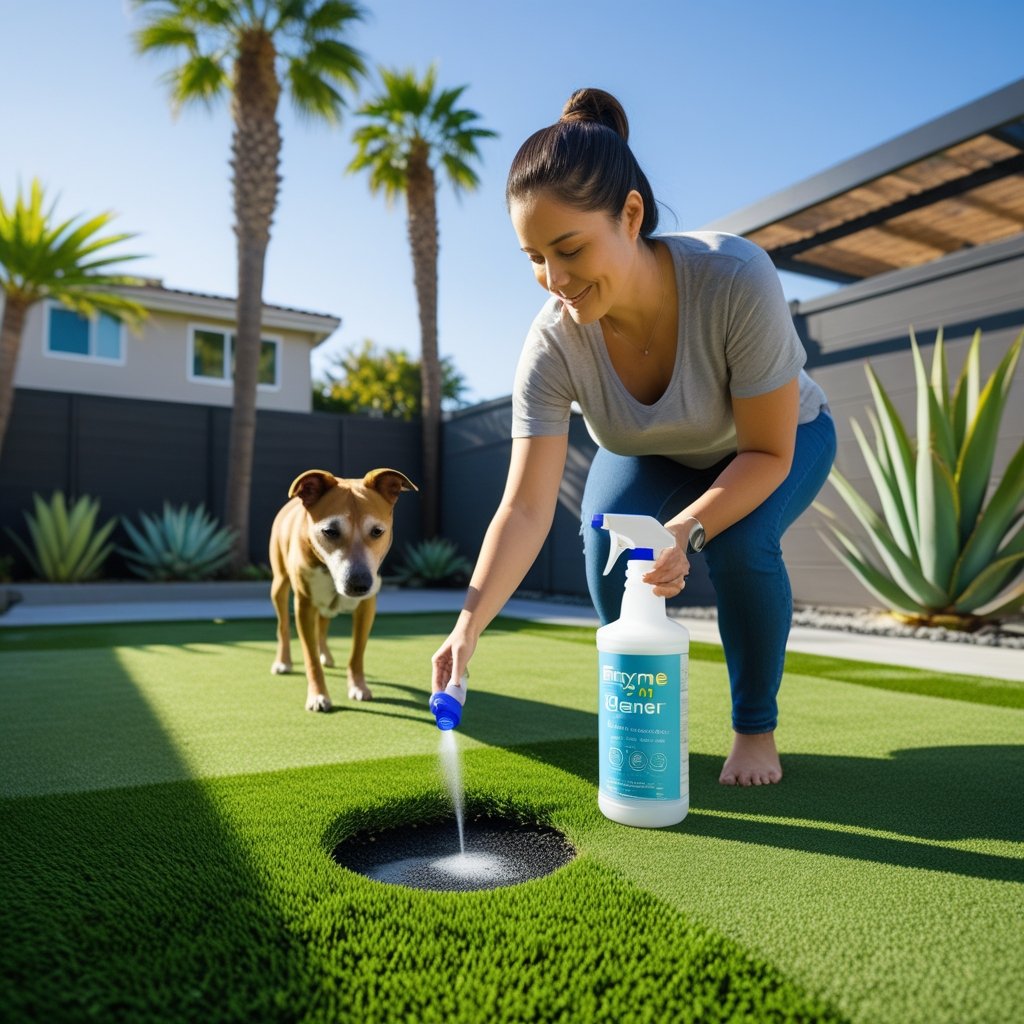
Enzyme-based cleaners are the gold standard for eliminating urine odor from artificial turf. These products contain specific biological enzymes that break down uric acid crystals at the molecular level, converting them into carbon dioxide and water that evaporate harmlessly. Unlike chemical deodorizers that mask smells, enzyme treatments destroy the odor source permanently.
For enzyme treatments to be effective, they must reach the uric acid crystals wherever they have accumulated. This means thorough application that saturates the infill layer, not just a surface spray. Professional-grade enzyme products are more concentrated and effective than consumer versions, and professional application ensures complete coverage and proper saturation depth.
Professional Solutions
Professional urine odor treatment begins with a thorough assessment of odor levels across your turf. Technicians identify the heaviest concentration areas and determine the appropriate treatment intensity. The surface is pre-cleaned to remove debris and loose waste. Then a professional-strength enzyme solution is applied at sufficient volume to fully saturate the infill in affected areas.
The enzyme solution needs time to work, typically several hours of contact time. During this period, the enzymes actively break down uric acid crystals throughout the infill depth. After the treatment period, the turf is rinsed to flush away the byproducts. For severe accumulation, multiple treatments may be needed at intervals of one to two weeks to fully eliminate the problem.
Prevention Tips
Once you have eliminated existing odor, prevention is far easier than remediation. Rinse your dog's favorite urine spots with a garden hose daily or every other day to dilute fresh urine before crystals form. Consider upgrading to zeolite infill, which naturally absorbs ammonia. Schedule regular professional enzyme treatments every six to eight weeks to prevent crystal buildup from reaching problematic levels. Train your dog to use a specific area of the turf if possible, concentrating the issue and making treatment more efficient. With consistent maintenance, your San Diego artificial turf can stay odor-free even with daily pet use.