Protecting Pet Paws from Hot Artificial Turf
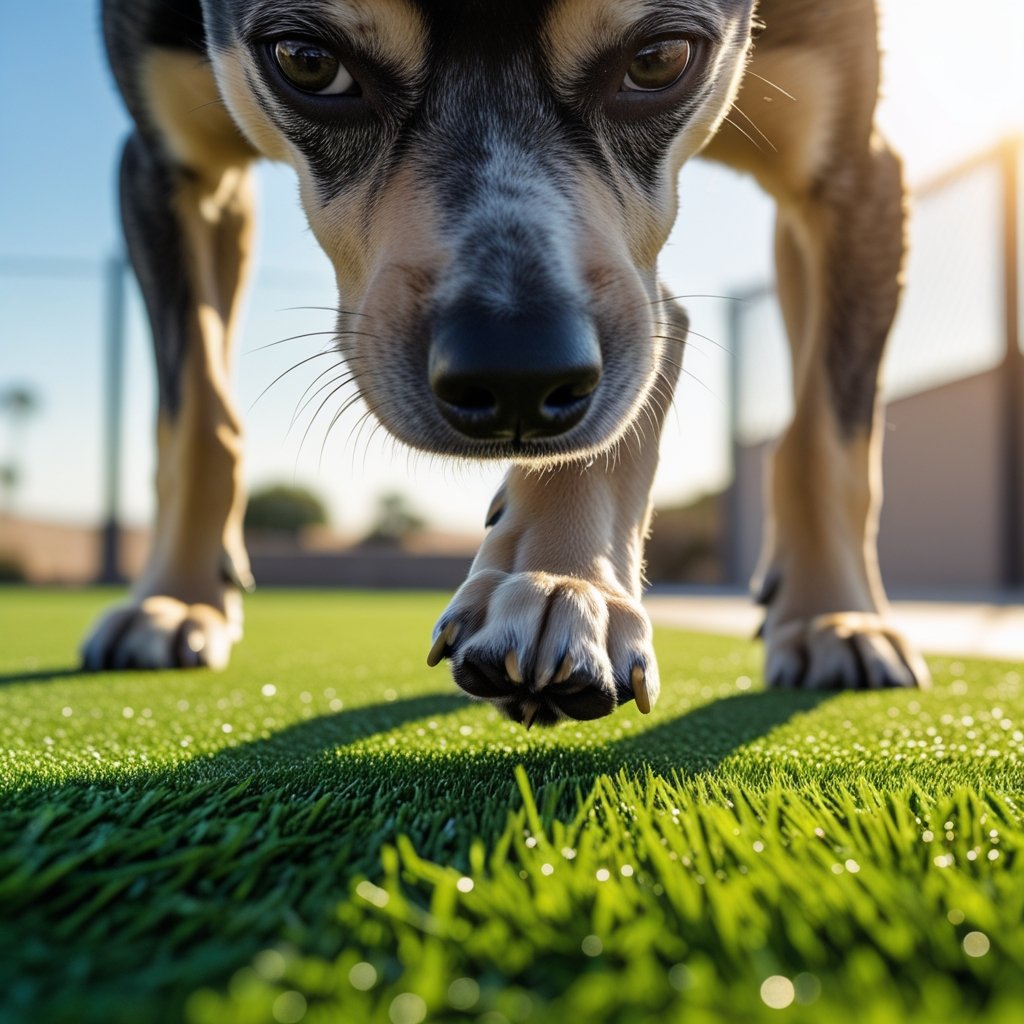
San Diego's beautiful sunny weather is one of the best things about living here, but it creates a hidden hazard for pet owners with artificial turf. Synthetic grass absorbs and retains heat from direct sunlight, and surface temperatures can climb significantly higher than the ambient air temperature. On a typical summer afternoon with air temperatures in the mid-80s, unshaded turf surfaces can reach 120 to 160 degrees Fahrenheit. These temperatures can burn pet paw pads in seconds, making awareness and prevention essential for every San Diego pet owner.
How Hot Turf Gets in San Diego Summer
Artificial turf temperatures follow a predictable daily pattern during San Diego's warm months. Morning surfaces are typically comfortable, matching the ambient temperature after cooling overnight. By mid-morning, surfaces in direct sun begin climbing. Peak temperatures usually occur between 1 p.m. and 4 p.m., when solar radiation is at its strongest and the turf has been absorbing heat for hours.
The actual surface temperature depends on several factors including turf color, with darker greens absorbing more heat than lighter shades. Infill type plays a role, as some materials retain heat more than others. Wind exposure helps dissipate heat, while sheltered areas run hotter. Humidity levels affect the cooling rate, with drier conditions allowing surfaces to get hotter.
On extreme heat days, which San Diego experiences periodically during Santa Ana wind events, surface temperatures can exceed 170 degrees Fahrenheit on dark-colored turf in full sun. This is hot enough to cause serious burns on unprotected skin or paw pads within just a few moments of contact.
Temperature Reduction Methods
Several strategies can meaningfully reduce turf surface temperatures. Shade structures like pergolas, shade sails, or shade cloth provide the most dramatic temperature reduction. Shaded turf typically stays 20 to 40 degrees cooler than adjacent sun-exposed areas. Even temporary shade from umbrellas or pop-up canopies helps during the hottest hours.
Trees planted strategically around your turf area provide natural, attractive shade that grows more effective over time. In San Diego, fast-growing species like coral trees, jacarandas, or California sycamores can provide meaningful shade within a few years of planting.
Lighter-colored turf products reflect more solar energy and stay cooler than dark varieties. If you are installing new turf or replacing existing turf, choosing a lighter green shade can reduce peak temperatures by 10 to 20 degrees.
Cooling Techniques
The simplest and most immediate cooling method is rinsing the turf with water before letting your pet outside. A few minutes of garden hose rinsing can drop surface temperature by 30 to 50 degrees within minutes. The evaporative cooling effect continues for 15 to 30 minutes after rinsing, providing a window of comfortable temperatures for pet play.
Some turf cooling products and sprays are available that enhance evaporative cooling or reflect solar radiation. These products are applied periodically and can provide modest temperature reduction. However, ensure any product used is pet-safe before application.
Built-in sprinkler or misting systems on timers can provide automatic cooling during the hottest hours. Set them to run for five minutes every hour during peak heat to maintain lower surface temperatures throughout the afternoon.
Best Times for Outdoor Play
Adjusting your pet's outdoor schedule is the simplest protective measure. Morning hours before 10 a.m. and evening hours after 5 p.m. typically offer comfortable turf temperatures during San Diego summers. These time windows align with lower ambient temperatures and reduced direct solar intensity.
Use the back-of-hand test before letting your pet onto the turf. Place the back of your hand on the turf surface and hold it for seven seconds. If it is too hot for your hand, it is too hot for your pet's paws. This quick test takes seconds and prevents burns.
Paw Protection
For pets that need outdoor access during hot hours, protective booties provide a physical barrier between paw pads and hot surfaces. Many dogs resist booties initially but adapt with patient introduction and positive reinforcement. Paw wax products designed for hot surfaces provide a thinner protective layer that some dogs tolerate better than booties.
Providing elevated rest areas like outdoor dog beds, raised platforms, or shaded deck sections gives your pet refuge from hot turf surfaces when they need a break. Water bowls placed on these elevated surfaces encourage your pet to move off the turf when resting. With simple precautions, you and your pets can enjoy your San Diego turf safely all summer long.