How to Prevent Weeds in Your Artificial Turf
One of the biggest selling points of artificial turf is never having to deal with weeds again. While synthetic grass dramatically reduces weed problems compared to natural lawns, it does not eliminate them entirely. Weeds are remarkably persistent, and under certain conditions they can find ways to grow in and around your artificial turf. The good news is that with proper maintenance and prevention, you can keep your San Diego synthetic lawn weed-free.
Why Weeds Grow in Artificial Turf
Understanding why weeds appear is the first step in preventing them. Weeds do not grow up through the turf from the soil below if a proper weed barrier was installed. Instead, they typically germinate from seeds that land on top of the turf and take root in the infill layer. Wind, birds, and nearby vegetation deposit seeds on your turf surface constantly. When these seeds find moisture and organic debris trapped in the infill, they have everything they need to sprout.
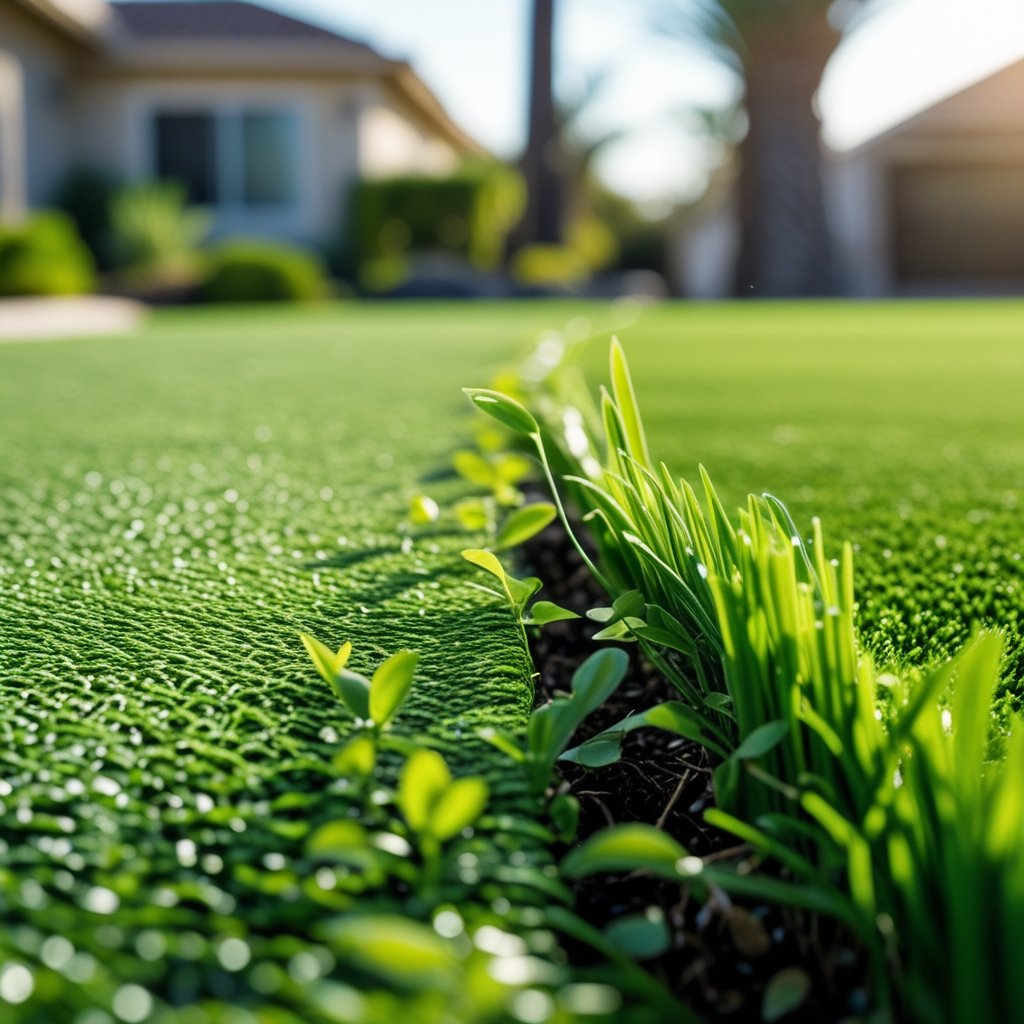
Weeds also commonly appear along the edges of turf installations where the synthetic surface meets soil, concrete, or other landscaping materials. Soil can migrate onto the turf edges, providing a perfect growing medium for opportunistic weeds. Gaps between the turf edge and adjacent surfaces create pathways for root systems to spread beneath the installation.
The Role of Weed Barriers
A quality weed barrier fabric installed beneath the turf during installation is your primary line of defense. This geotextile membrane blocks weed growth from below while still allowing water to drain through. Over time, however, weed barriers can degrade, shift, or develop tears from root intrusion, ground settling, or installation imperfections. If you are seeing weeds pushing up from below, the barrier may need inspection and repair.
For existing installations where no weed barrier was used, retrofitting one is possible but requires lifting the turf. This is a significant project best handled by professionals, but it provides long-term protection.
Prevention Methods That Work
Regular debris removal is the most effective prevention strategy. Leaves, grass clippings, pollen, and other organic material that accumulates on your turf creates a composting layer in the infill that nourishes weed seeds. By keeping your turf surface clean, you eliminate the growing medium weeds need. Use a leaf blower weekly during fall and spring when organic debris is heaviest.
Edge maintenance prevents weeds from encroaching from adjacent soil areas. Keep soil levels along turf borders below the turf surface so dirt does not wash onto the synthetic grass. Apply a granular pre-emergent herbicide along the edges twice yearly to prevent seeds from germinating in border zones.
Infill maintenance matters because compacted, debris-laden infill provides better conditions for weed seeds than clean, loose infill. Regular power brushing disrupts any seeds that have settled and redistributes the infill to create an inhospitable environment for germination.
Safe Weed Removal Techniques
When weeds do appear, prompt removal prevents them from establishing deep roots and spreading seeds. For small weeds, hand-pulling is the safest method. Grasp the weed at the base and pull straight up to remove the entire root system. Avoid using metal tools that could damage the turf backing or fibers.
For more stubborn weeds, a targeted application of a gentle, non-selective herbicide directly to the weed is effective. Be careful not to overapply, as some herbicides in high concentrations can discolor turf fibers. Vinegar-based natural herbicides work for small weeds but may need repeated applications.
Never use a weed torch or flame on artificial turf. Synthetic turf fibers will melt and sustain permanent damage from heat. Similarly, avoid using boiling water, which can damage both fibers and the turf backing.
Professional vs. DIY Approaches
Routine weed prevention through debris removal and edge maintenance is easily managed as a DIY task. However, persistent weed problems that keep recurring despite your efforts suggest a deeper issue that benefits from professional assessment. A professional can inspect your weed barrier, evaluate your infill condition, check for edge breaches, and implement targeted solutions that address the root cause rather than just the symptoms.
Professional turf maintenance services include debris removal, power brushing, and edge inspection as standard components, making them an effective preventive measure against weed problems. Regular professional service combined with weekly DIY upkeep keeps weeds out of your San Diego artificial turf for good.