Playground Turf Cleaning: Ensuring Child Safety
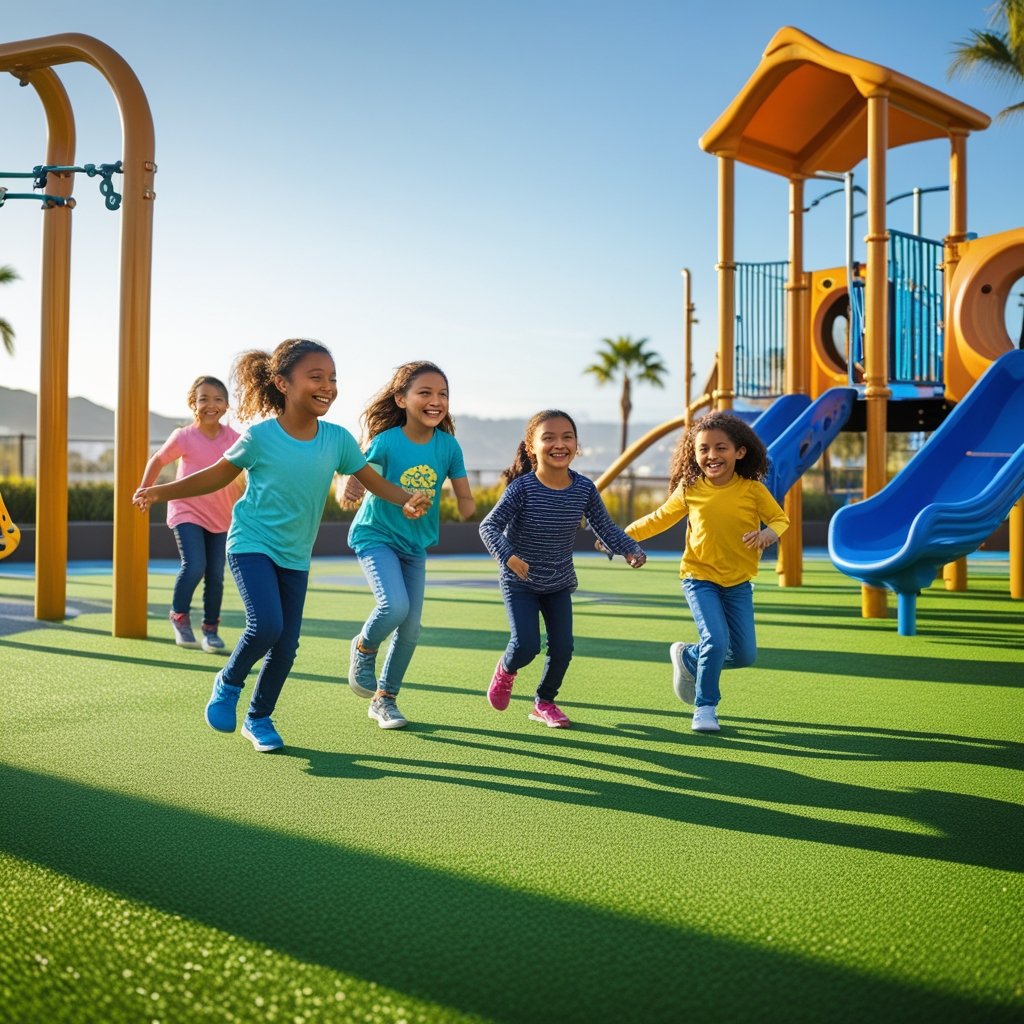
Artificial turf has transformed playgrounds across San Diego. Schools, parks, daycare centers, and residential communities have installed synthetic grass surfaces that are durable, low-maintenance, and provide a consistent play surface year-round. However, playground turf carries a heightened responsibility because children are the primary users. Young children crawl on the surface, put their hands in their mouths after touching the turf, and have developing immune systems that are more vulnerable to pathogens. Maintaining playground turf to the highest cleanliness standards is not optional; it is an obligation to the children who play on it.
Child Safety Standards
Playground surfaces must meet specific safety requirements beyond what residential turf demands. Impact attenuation standards set by organizations like ASTM International specify how effectively the surface absorbs falls from various heights. Infill depth and condition directly affect this critical safety characteristic. Depleted or compacted infill reduces fall protection and increases the severity of injuries from tumbles and falls.
Accessibility standards require that playground surfaces be maintained in a condition that is navigable by children with mobility aids. Uneven infill, matted fibers, and edge lifting can create obstacles that violate accessibility requirements. Regular maintenance keeps the surface smooth, level, and accessible for all children.
Many San Diego school districts and municipalities have maintenance schedules written into their playground specifications. Compliance with these schedules is not just good practice; it may be a legal requirement for the managing organization.
Bacteria Risks on Playground Turf
Playground turf is exposed to a wide range of contaminants. Food spills, juice boxes, pet waste from animals that access the area outside of playground hours, bird droppings, and the general soil and debris that children track onto the surface all contribute to bacterial contamination. Studies have found that unmaintained outdoor turf surfaces can harbor bacteria including staphylococcus, E. coli, and various mold species.
Children's behavior amplifies the risk from these contaminants. Toddlers who crawl on the surface have full-body contact with the turf. Children of all ages touch the surface during play and then touch their faces, eat snacks, or rub their eyes. This hand-to-mouth transfer is the primary pathway for turf contaminants to cause illness.
The risk is manageable with proper cleaning, but the consequences of neglect are real. Skin infections, gastrointestinal illness, and respiratory irritation can all result from exposure to contaminated play surfaces.
Sanitization Importance
Sanitization is the process of reducing pathogen levels on the turf surface to safe levels. This goes beyond simple cleaning, which removes visible dirt and debris. Sanitization uses antimicrobial agents to kill bacteria, viruses, and fungi that are invisible to the eye but present in the infill and on fiber surfaces.
Professional sanitization treatments for playground turf use products that are effective against a broad spectrum of pathogens while remaining safe for children after the treatment has dried. The best products leave no harmful residue and maintain their antimicrobial activity for days or weeks after application.
Cleaning Frequency for Playgrounds
Playground turf cleaning frequency depends on the volume of use and the age of the children. High-use playgrounds serving toddlers and preschoolers should receive the most frequent attention. Recommended schedules include daily debris removal and visual inspection, weekly surface rinsing and spot cleaning, biweekly professional sanitization treatment during the school year, and monthly deep cleaning with power brushing, enzyme treatment, and comprehensive sanitization.
During summer months, when San Diego playgrounds see extended daily use, consider increasing professional service frequency. Similarly, during cold and flu season, more frequent sanitization helps reduce pathogen transmission on shared play surfaces.
Professional Service Benefits
Professional playground turf maintenance provides benefits that in-house custodial staff typically cannot match. Commercial-grade sanitization products achieve higher pathogen kill rates than consumer products. Professional power brushing equipment maintains infill condition for proper fall protection. Trained technicians identify safety issues like edge lifting, seam separation, and infill depletion that custodial staff may overlook.
Professional service also provides documentation that demonstrates due diligence in maintaining safe play surfaces. Service records showing regular sanitization, infill assessment, and safety inspections protect the managing organization in the event of an injury claim. At Turf Cleaning SD, we provide detailed service reports for every playground maintenance visit, giving our clients complete documentation of the care their surfaces receive.