How Inland Heat Affects Your Artificial Turf
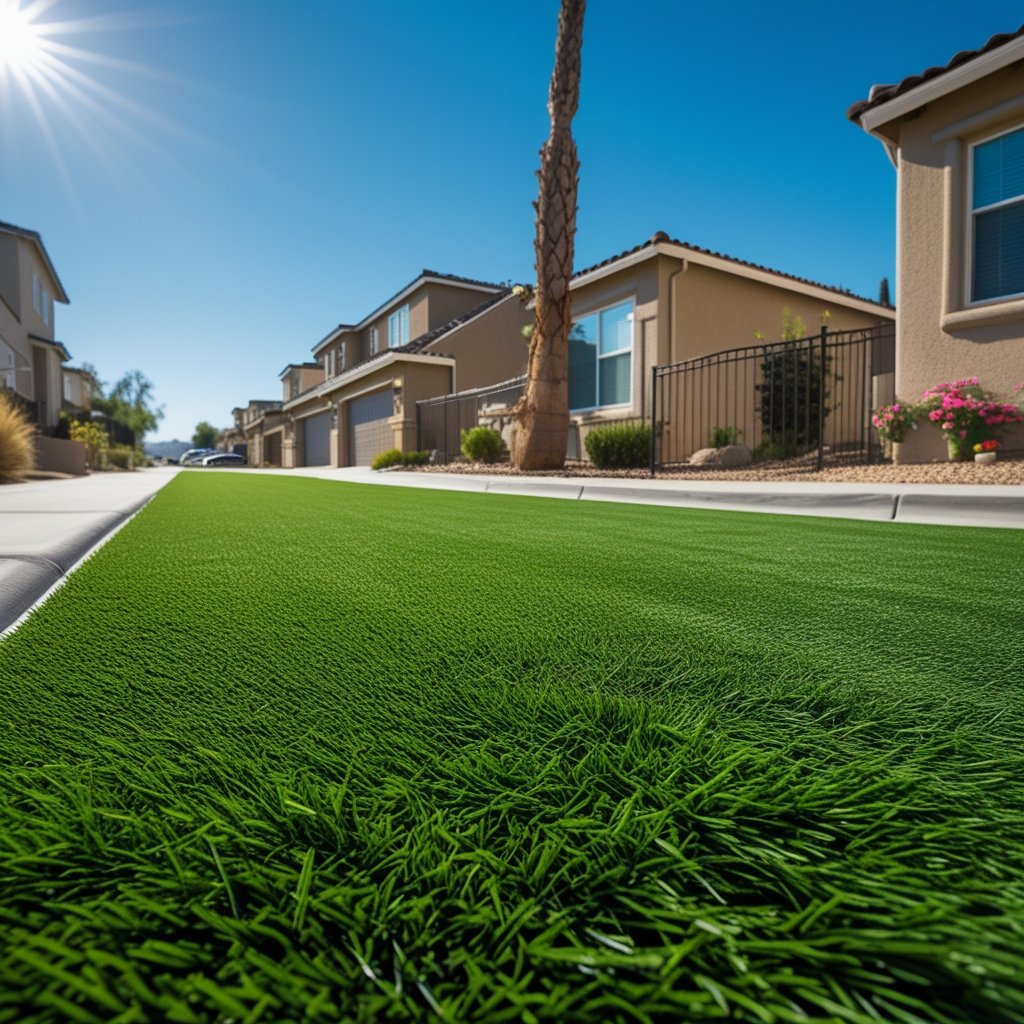
San Diego's climate varies dramatically from coast to inland. While coastal communities enjoy moderate temperatures moderated by ocean breezes, inland areas like Escondido, El Cajon, Santee, Poway, and Lakeside regularly experience temperatures 15 to 25 degrees higher during summer months. These extreme heat conditions create specific challenges for artificial turf that inland homeowners need to understand and address through appropriate maintenance.
Temperature Differences Across San Diego
On a typical summer day, coastal San Diego neighborhoods might see highs in the mid-70s while inland communities experience temperatures in the mid-90s or higher. During heat waves, inland temperatures can soar above 100 degrees. These temperature differences have a direct impact on artificial turf, as synthetic materials absorb and retain heat. Surface temperatures on artificial turf can reach 140 to 170 degrees Fahrenheit on the hottest inland San Diego days, making the turf uncomfortable and potentially unsafe for bare feet and pet paws.
Understanding this temperature dynamic is the first step in managing heat-related turf challenges. Inland homeowners should not expect their turf to perform identically to coastal installations; the environmental demands are fundamentally different.
Heat Impact on Turf Materials
Sustained high temperatures affect artificial turf in several ways. The polyethylene and polypropylene fibers that make up most residential turf are engineered to withstand UV exposure and heat, but prolonged extreme temperatures accelerate material degradation over time. UV stabilizers in the turf fibers are consumed more quickly under intense sun exposure, gradually reducing the turf's resistance to fading and brittleness.
Heat also affects the infill layer. Some infill materials, particularly crumb rubber, absorb heat and radiate it back, amplifying the surface temperature effect. Sand infill tends to stay slightly cooler but can still reach uncomfortable temperatures. The extreme temperature cycling from cool nights to hot days that characterizes inland San Diego can cause expansion and contraction in turf materials, potentially affecting seams and edges over time.
Cooling Strategies for Inland Turf
Several strategies can help manage heat on inland San Diego turf installations. Strategic shade placement is the most effective long-term solution. Shade structures, pergolas, shade sails, or strategically planted trees can dramatically reduce turf surface temperatures in the areas beneath them. Even partial shade during peak afternoon hours makes a significant difference.
Light watering during the hottest hours can provide temporary cooling. A brief rinse with a garden hose can reduce surface temperature by 30 to 50 degrees for a short period. While this uses some water, the amount is far less than what natural grass would require. Some homeowners install simple timer-controlled misting systems that periodically dampen the turf surface during peak heat hours, providing consistent cooling with minimal water use.
Choosing lighter-colored turf can also help, as darker colors absorb more heat. When installing or replacing turf, inland homeowners should consider lighter green shades with higher UV resistance ratings.
Maintenance Adjustments for Hot Climates
Inland heat requires several maintenance adjustments compared to coastal or moderate-climate properties. Cleaning should be scheduled for early morning hours before temperatures rise, both for the comfort of the cleaning crew and because cleaning products work more effectively at moderate temperatures. Hot turf surfaces can cause some cleaning solutions to evaporate before they have time to work.
Infill maintenance is more critical in hot inland areas because heat accelerates compaction and displacement. More frequent infill assessment and redistribution helps maintain proper drainage and cushioning. The extreme heat also intensifies odors from pet waste and organic matter, so pet owners in inland communities may need more frequent enzyme treatments than coastal pet owners.
Long-Term Heat Management
For inland San Diego homeowners, long-term turf management means accepting that heat is a persistent factor and planning accordingly. Investing in high-quality turf with strong UV stabilization, maintaining a consistent professional cleaning schedule, implementing cooling strategies, and monitoring the turf for heat-related wear are all part of responsible ownership. With proper care and attention to the unique demands of inland heat, artificial turf can still deliver years of excellent performance and enjoyment even in San Diego's hottest neighborhoods.