Infill Replacement: When and Why You Need It
The infill in your artificial turf is one of its most important components, yet it is also one of the most overlooked. Infill is the granular material that sits between the turf fibers, providing weight, stability, cushioning, and drainage support. Over time, infill can break down, compact, or wash away, leading to a range of problems that affect both the appearance and performance of your synthetic lawn. Knowing when and why to replace your infill can save you from costly turf replacement down the road.
Signs Your Infill Needs Replacement
Several telltale signs indicate that your infill is due for replacement. The most obvious is when your turf fibers start laying flat and will not stand upright even after brushing. This happens because there is not enough infill to support the fiber blades. You may also notice that your turf feels harder underfoot, lacking the soft cushion it had when first installed. This is a sign of severe infill compaction or depletion.
Other warning signs include visible backing material showing through the turf, uneven or lumpy areas where infill has shifted, slower drainage after rain or watering, and edges or seams that are lifting or separating. If your turf is more than five years old and has never had infill topped off or replaced, it is almost certainly due for attention.
Types of Infill Materials
Not all infill is created equal, and the right choice depends on your specific needs. Silica sand is the most common and affordable option, providing good drainage and stability. It works well for general residential use and is widely available. Crumb rubber, made from recycled tires, offers excellent cushioning and is popular for athletic fields and play areas. However, some homeowners prefer to avoid it due to environmental and health concerns.
Zeolite infill is an increasingly popular choice in San Diego, especially for pet owners. This natural mineral has odor-absorbing properties that help neutralize pet urine smells. Acrylic-coated sand is another premium option that resists bacteria growth and provides a cooler surface temperature, which is a significant advantage during San Diego summers. Your turf professional can help you choose the best infill type for your situation and budget.
The Replacement Process
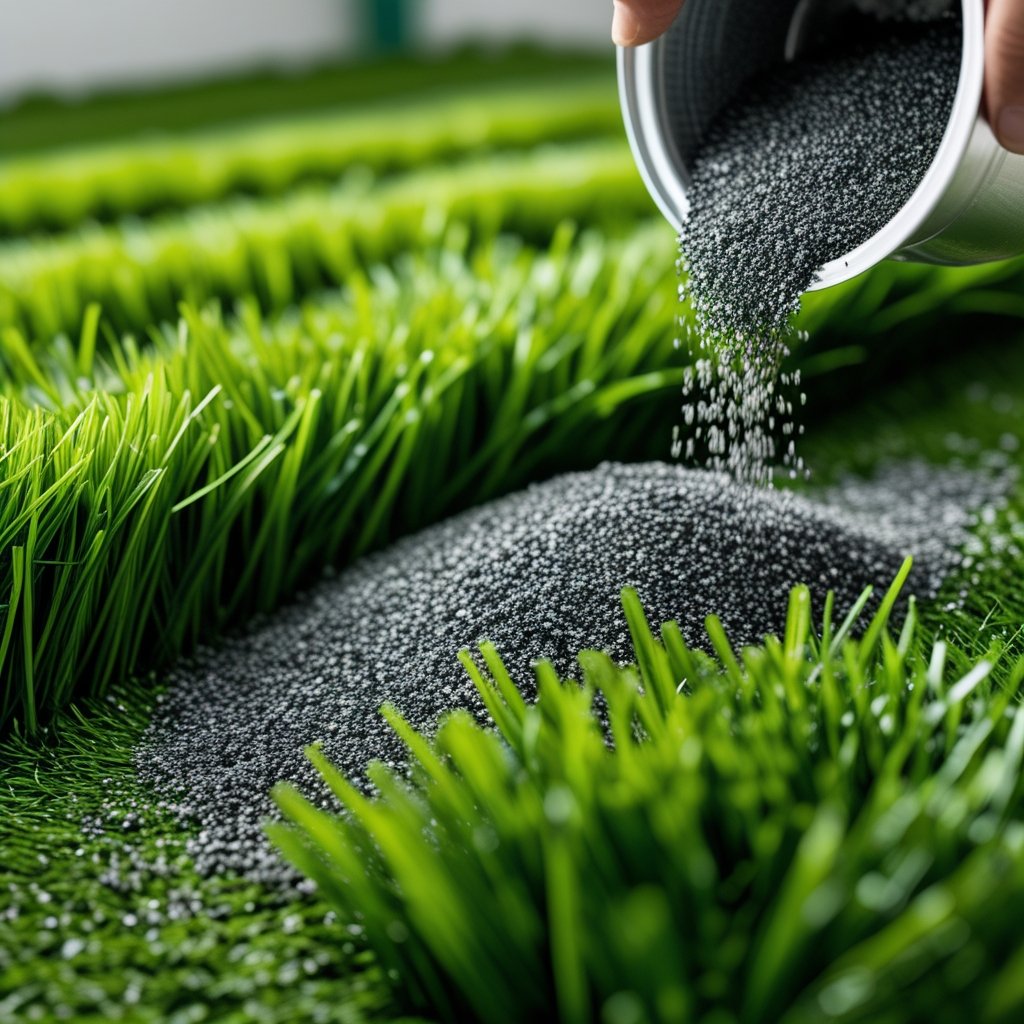
Professional infill replacement begins with a thorough cleaning of your existing turf. The old or depleted infill is removed using specialized equipment, and the turf backing and drainage system are inspected for any damage. If everything checks out, fresh infill is evenly distributed across the surface using a drop spreader or similar tool. The new infill is then brushed into the fibers to ensure uniform coverage and proper depth.
For partial replacements or top-offs, the existing infill may not need to be fully removed. A technician will assess the current infill depth and condition, then add new material only where needed. This is a more cost-effective approach when your infill is still in reasonable shape but has thinned in certain areas due to foot traffic or weather.
Cost Considerations
The cost of infill replacement varies based on the size of your lawn, the type of infill you choose, and whether you need a full replacement or just a top-off. A basic silica sand top-off for a typical San Diego backyard is quite affordable, while a full replacement with premium zeolite or acrylic-coated infill will cost more. However, even the higher-end options are a fraction of the cost of replacing the entire turf system.
Think of infill replacement as preventive maintenance rather than an expense. Neglecting your infill leads to accelerated fiber wear, drainage problems, and a turf surface that looks and feels worn out years before its time. A timely infill replacement can add years of life to your artificial turf, making it one of the smartest investments you can make.
How Infill Replacement Extends Turf Life
Properly maintained infill protects your turf fibers from premature wear. When fibers have adequate support from below, they resist flattening and maintain their upright position longer. Good infill also ensures proper drainage, which prevents water from pooling on the surface and causing mold or mildew growth. In San Diego's climate, where winter rains can be heavy, good drainage is essential for turf longevity.
Most quality artificial turf installations are designed to last 15 to 20 years. However, without periodic infill maintenance, you may start seeing significant deterioration after just 7 to 10 years. By keeping your infill fresh and at the proper depth, you protect your investment and ensure that your lawn continues to look great for its full expected lifespan. Contact Turf Cleaning SD to schedule an infill assessment and find out if your turf is due for a refresh.