Proper Hosing Techniques for Artificial Turf
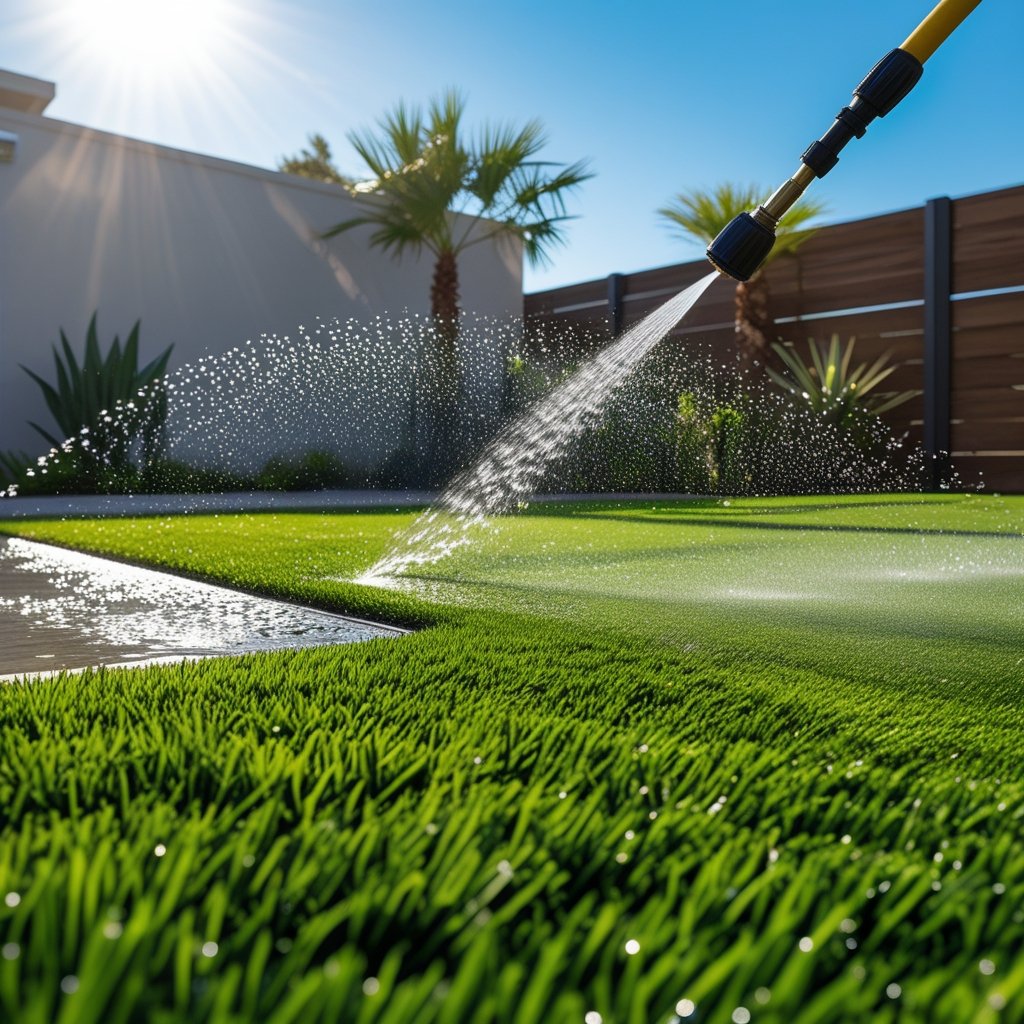
Rinsing your artificial turf with a garden hose is one of the simplest and most effective maintenance tasks you can perform. It cools the surface, flushes away contaminants, reduces odors, and helps maintain the appearance of your synthetic lawn. However, there is more to effective hosing than simply turning on the water and spraying. Proper technique ensures you get the maximum benefit from each rinse while using water responsibly in water-conscious San Diego.
When to Hose Your Turf
The timing of your rinse matters. The best time to hose your turf for general maintenance is early morning or late afternoon, when temperatures are moderate and evaporation rates are lower. This allows the water to work longer on the surface before evaporating, providing more effective cleaning and longer-lasting cooling. Avoid rinsing during the hottest part of the day when water evaporates almost immediately, reducing its cleaning effectiveness.
Specific situations call for immediate rinsing regardless of time. After pet waste removal, rinse the area right away to prevent bacterial growth. After food or drink spills, prompt rinsing prevents staining. After Santa Ana wind events, rinse as soon as the wind dies down to remove settled dust. Before outdoor gatherings, a quick rinse cools the surface and freshens the appearance. These targeted rinses address specific needs and do not need to follow the general timing guidelines.
Water Pressure Guidelines
A standard garden hose with a spray nozzle provides adequate pressure for turf rinsing. Use a fan or shower setting on your nozzle for general rinsing, as this covers more area with even water distribution. For targeted cleaning of pet waste spots or stains, switch to a more focused stream to concentrate the cleaning power on the problem area. Avoid using the most powerful jet setting continuously, as excessive pressure can displace infill from the surface over time.
If you notice infill granules being washed away during rinsing, you are using too much pressure. Reduce the flow or switch to a gentler spray pattern. The goal is to flush contaminants through the turf, not to blast the infill out of position. Consistent moderate pressure is more effective than brief bursts of high pressure, as it allows water to penetrate deeper into the infill layer where contaminants accumulate.
Direction and Pattern
For the most effective rinse, work in a systematic pattern across your turf rather than spraying randomly. Start at one end and work toward the other, overlapping your passes to ensure complete coverage. This prevents you from accidentally pushing contaminants from a cleaned area back onto a dirty one. Think of it like mowing a lawn in rows: systematic coverage ensures nothing is missed.
When rinsing pet waste areas, spray from the outside of the contaminated zone inward, then flush the concentrated center outward toward the turf edge. This prevents spreading the contamination to a larger area. For general maintenance rinsing, spray in the direction of natural drainage to help water move through the turf system efficiently rather than fighting against the grade.
Targeting Problem Areas
Not every rinse needs to cover your entire turf surface. Targeted rinsing of problem areas is an efficient approach for daily and between-service maintenance. Pet waste spots deserve the most frequent attention, as they are the primary source of bacteria and odor on residential turf. High-traffic areas benefit from extra rinsing to flush compacted contaminants. Shaded zones are prone to moisture retention and mold, so rinse them during sunny parts of the day when they can dry quickly afterward.
Areas near barbecues, dining spaces, and entertainment zones accumulate food and drink residue that should be rinsed after each use. Turf near flower beds and garden areas collects mulch, soil, and plant debris that washes in during watering or rain. A targeted approach addresses these specific contamination sources without wasting water on clean areas of the lawn.
Water Conservation in San Diego
As a water-conscious community, San Diego residents are right to think about the water usage involved in turf rinsing. The good news is that rinsing artificial turf uses significantly less water than irrigating a comparable natural lawn. A typical weekly rinse of a residential turf area uses a fraction of the water that a natural lawn requires for irrigation. Still, there are ways to minimize water use further.
Use targeted rinsing rather than full-surface rinsing whenever possible. Invest in a high-quality spray nozzle with adjustable settings to control flow precisely. During cooler months when bacterial growth is slower and odors are less of a concern, reduce your rinsing frequency. When you do rinse, make each pass count by using proper technique rather than overwatering to compensate for poor coverage.
Limitations of Hosing
While regular hosing is an essential part of turf maintenance, it has limitations. Water alone cannot break down uric acid crystals from pet urine, which require enzyme treatments. Surface rinsing does not reach deep infill contamination that accumulates over months. Hosing does not sanitize the surface or kill bacteria; it simply flushes some contaminants away. These deeper needs are why professional cleaning remains necessary even for homeowners who rinse religiously. Think of hosing as the daily brushing that keeps things manageable between professional dental cleanings.