HOA Artificial Turf Maintenance in San Diego
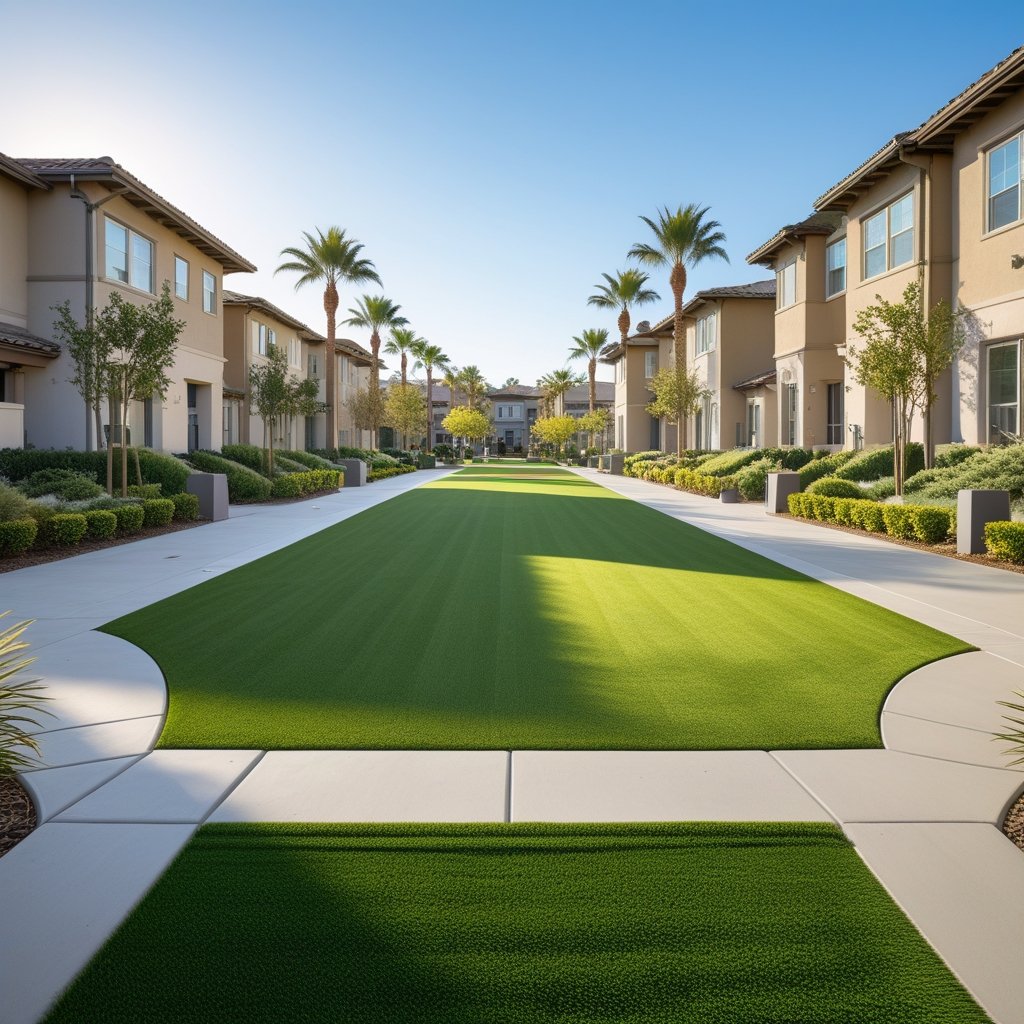
Homeowners associations throughout San Diego are embracing artificial turf for common areas, medians, park strips, dog parks, and recreational spaces. Synthetic grass aligns perfectly with Southern California's water conservation goals while providing year-round green landscaping that enhances property values. However, HOA turf installations face unique maintenance challenges that differ significantly from residential properties. Managing these shared spaces requires professional planning, consistent service, and a budget that supports long-term performance.
HOA Turf Challenges
Common area turf serves a diverse population with varying usage patterns. Dog walkers, children at play, residents exercising, and foot traffic from daily routines all impact the same surfaces. Unlike a private backyard where one household controls the use, HOA turf must accommodate everyone's activities and their associated wear.
Pet waste is often the biggest challenge for HOA turf. While most associations have rules requiring residents to pick up after their pets, compliance is never perfect. Uncollected waste contributes to odor, bacterial contamination, and drainage problems. The more units sharing a common turf area, the greater the accumulation and the more critical professional maintenance becomes.
Common area turf also faces accountability gaps. In a private home, the homeowner sees and addresses problems quickly. In shared spaces, issues can go unreported for weeks as each resident assumes someone else will handle it. By the time a problem reaches the HOA board, it may have progressed from a simple fix to a significant repair.
Compliance Requirements
Many San Diego HOAs include landscape maintenance standards in their CC&Rs that apply to common area turf. These standards may specify minimum maintenance frequencies, appearance benchmarks, safety requirements for play areas, and odor control standards. Failing to maintain turf to these standards can expose the HOA board to complaints, fines from the city, or even legal action from residents.
Having a professional maintenance contract in place demonstrates that the board is fulfilling its fiduciary duty to maintain common property. Service records document compliance and provide evidence of proactive maintenance in the event of disputes or claims.
Commercial-Grade Service
HOA turf requires commercial-grade service that exceeds residential maintenance in scope and frequency. Common area cleaning should include weekly debris removal across all turf surfaces, biweekly power brushing of high-traffic zones, monthly full-surface deep cleaning with enzyme treatment and sanitization, quarterly infill assessment and replenishment, and semi-annual comprehensive inspection with a written condition report to the board.
Dog park areas within HOA communities need even more frequent attention, often weekly deep cleaning to manage the concentrated waste from community-wide pet use.
Budgeting for Associations
Artificial turf maintenance should be a line item in the HOA's annual budget, not an afterthought. The cost varies based on total turf square footage, the number of separate areas requiring service, usage intensity and whether pet areas are included, and the service frequency needed. A professional turf maintenance provider can assess your community's specific installation and provide an annual cost estimate that the board can incorporate into the budget.
When budgeting, factor in both routine maintenance and a reserve for occasional repairs. Seam repairs, infill replenishment, and edge maintenance are predictable expenses that should be planned rather than treated as emergencies. Most HOAs find that proactive maintenance is significantly less expensive than reactive repair of neglected turf.
Scheduling for Common Areas
Scheduling maintenance in common areas requires coordination to minimize disruption to residents. Early morning service before peak usage hours is typically best. Establish a regular service day so residents know when to expect maintenance activity. Post service schedules on community boards or distribute them via the HOA communication channels so pet owners and families can plan accordingly.
For areas requiring drying time after enzyme treatment, temporarily block access with signage during the treatment period. Most professional treatments need two to four hours of contact time, making early morning service ideal as the area is ready for use by late morning.
Turf Cleaning SD partners with several San Diego HOAs to provide comprehensive common area turf maintenance. Our commercial service plans are designed to keep shared spaces clean, safe, and attractive for the entire community while staying within the association's budget parameters.