How to Fix Standing Water on Your Artificial Turf
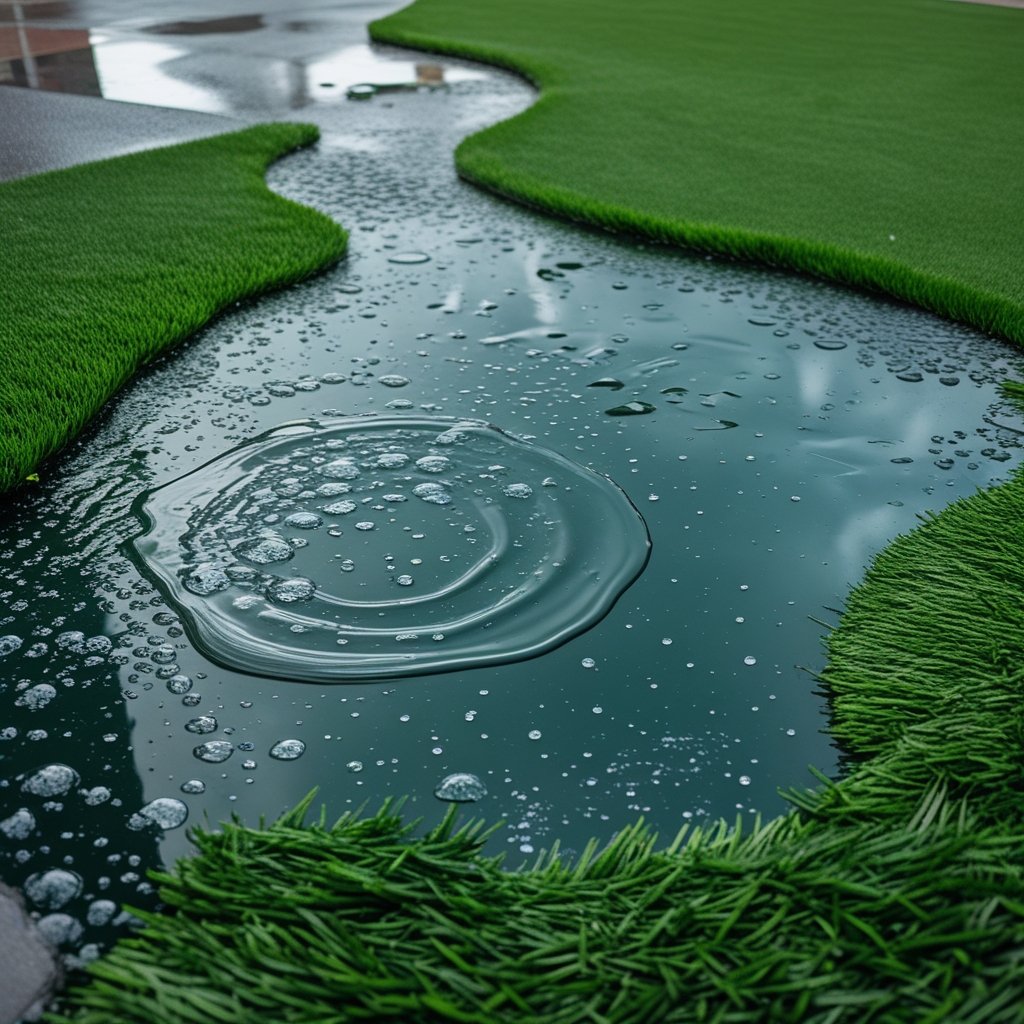
Artificial turf is designed to drain efficiently, keeping the surface dry and usable shortly after rainfall or rinsing. When water pools on your turf surface and lingers for extended periods, it is a clear signal that something in the drainage system needs attention. Standing water not only makes your turf unusable but creates conditions for mold growth, odor development, and long-term damage to the turf system. Here is how San Diego homeowners can identify and fix the most common causes of standing water.
Causes of Standing Water
Infill compaction is the most frequent cause of surface pooling. When the infill layer becomes tightly packed from foot traffic, pet activity, and natural settling, water cannot pass through it efficiently. Instead of draining down through the infill and out the backing perforations, water sits on top of the compacted layer. This problem tends to develop gradually and is most noticeable in high-traffic zones.
Blocked drainage perforations in the turf backing prevent water from passing through even when the infill is loose. Mineral deposits, organic debris, and fine silt can seal these small holes over time. This issue is common in areas that receive runoff from adjacent landscaping or hardscaping that carries sediment onto the turf surface.
Base grading issues cause water to collect in low spots beneath the turf. During installation, the aggregate base is graded to create a consistent slope that directs water toward the perimeter. If the base settles unevenly over time, or if it was not properly graded initially, depressions develop where water accumulates beneath the turf and eventually saturates up through the surface.
Insufficient base material or the wrong type of aggregate can also cause drainage failure. The base layer needs to be porous enough to allow water passage while stable enough to maintain its grade. Clay-rich or fine-grained base materials compact over time and restrict drainage.
Drainage Fixes You Can Try
For mild cases caused by surface-level compaction, regular power brushing can restore drainage. Agitating the infill layer breaks up compaction and reopens pathways for water flow. If you do not have access to a power brush, a stiff nylon-bristle broom used vigorously across affected areas can provide temporary relief.
Rinsing the turf surface with a garden hose after brushing helps flush fine particles out of the infill and through the drainage system. This combination of mechanical agitation and flushing often resolves mild drainage issues without professional intervention.
Checking and clearing your turf edges ensures water has clear exit paths around the perimeter. Soil, mulch, or debris buildup along borders can dam water on the surface. Clearing these obstructions often improves drainage noticeably.
When Grading Is the Problem
If standing water consistently appears in the same locations regardless of maintenance efforts, the base grading is likely the culprit. Resolving grading issues requires lifting the turf in the affected area, adding or redistributing base material to eliminate low spots and restore proper slope, compacting the corrected base, and reinstalling the turf. This is a professional-level repair that requires experience with base preparation and turf reinstallation. Attempting it without proper knowledge risks creating new problems.
Professional Solutions
A professional assessment pinpoints the exact cause of your standing water problem and determines the most effective and economical solution. Technicians use diagnostic techniques including percolation testing, base inspection, and drainage flow analysis to identify where the system is failing.
For infill-related issues, professional deep cleaning and power brushing combined with infill replenishment typically resolves the problem in a single service visit. For backing perforation blockages, specialized cleaning equipment clears the drainage holes without damaging the turf material. For base problems, technicians have the equipment and expertise to lift, correct, and reinstall turf sections efficiently.
San Diego Rain Considerations
San Diego's rainfall patterns make drainage performance particularly important. Our winter storms can deliver significant rainfall in short periods, testing drainage capacity to its limits. Having your turf professionally assessed and serviced before the rainy season begins is the best preventive measure. Addressing drainage issues during dry weather is easier, less expensive, and prevents the water damage and mold problems that develop when compromised drainage meets heavy rain. Do not wait for the first big storm to reveal a problem that could have been caught and fixed during routine maintenance.