Essential Tools for Artificial Turf Care
Maintaining artificial turf does not require an extensive collection of specialized equipment. A small set of the right tools, stored conveniently near your turf area, makes routine maintenance quick and effective. However, using the wrong tools can damage your turf, displace infill, and create problems that are expensive to fix. This guide covers the essential tools every San Diego artificial turf owner should have, along with important warnings about what to avoid.
Must-Have: Stiff-Bristle Push Broom
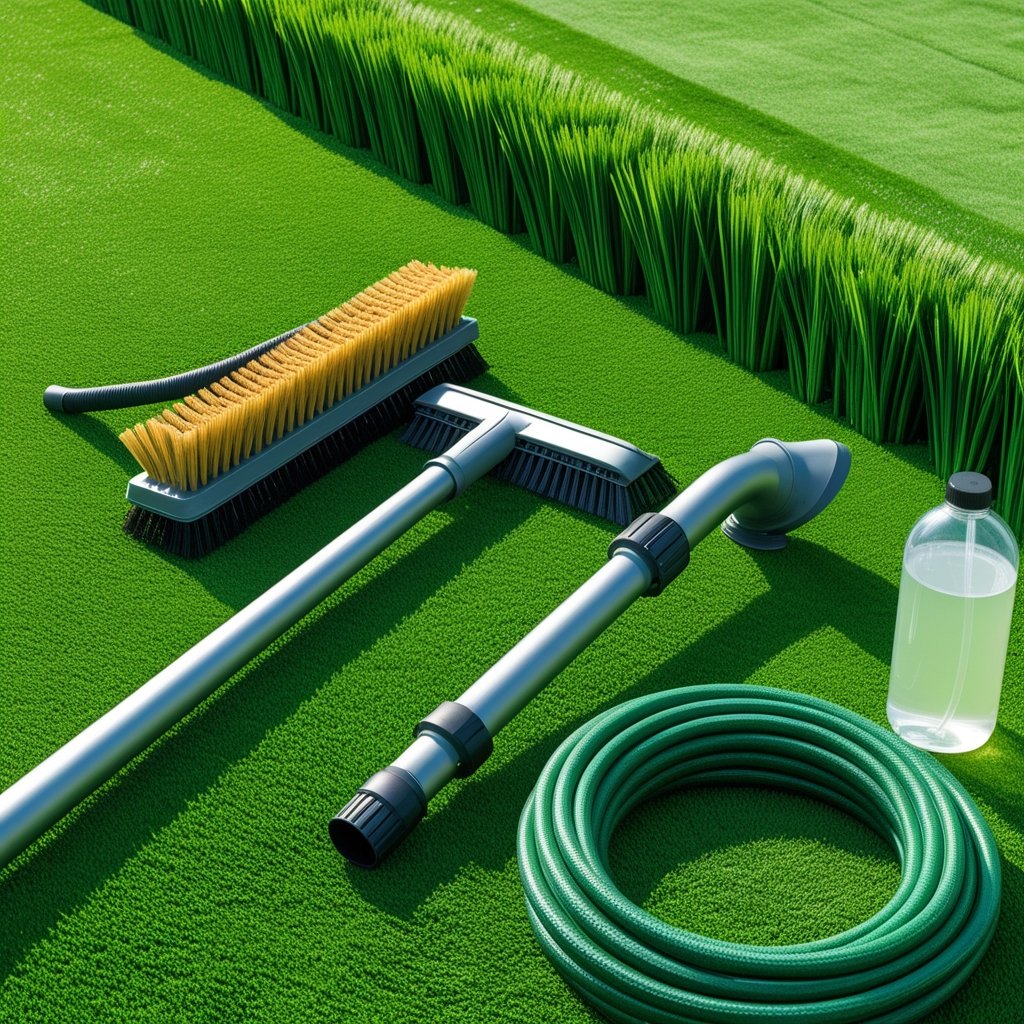
A stiff-bristle push broom is the single most important tool in your turf maintenance kit. Look for a broom with synthetic bristles made from nylon or polypropylene, at least 18 inches wide for efficient coverage. The bristles should be stiff enough to lift turf fibers but flexible enough to avoid snagging or pulling them. A broom with bristles around three to four inches long provides the ideal balance of reach and control.
Your push broom serves multiple purposes. It lifts matted turf fibers back to their upright position, redistributes surface-level infill, sweeps away light debris, and helps break up organic matter that has settled on the surface. Use it weekly for general grooming and as needed after heavy foot traffic or gatherings. A quality push broom lasts for years and is the tool you will reach for most often in your turf care routine.
Must-Have: Garden Hose with Spray Nozzle
A garden hose with an adjustable spray nozzle is your primary cleaning tool. The nozzle should offer multiple spray patterns, including a fan setting for general rinsing and a more focused stream for targeted cleaning. Choose a nozzle with a comfortable grip and easy-to-adjust settings since you will be using it frequently. A hose long enough to reach every part of your turf from the nearest spigot prevents the need to move the hose connection during cleaning.
If your water source is far from the turf, consider installing a dedicated hose bib closer to the turf area. Having convenient water access makes it much more likely that you will rinse pet waste spots promptly and perform regular maintenance rinses rather than putting them off due to inconvenience.
Must-Have: Leaf Blower
A leaf blower is invaluable for quickly clearing debris from your turf surface. Both electric and gas-powered blowers work well. Choose a model with variable speed control so you can use a gentle setting for light debris and increase power for heavier material like wet leaves. Cordless electric models are convenient for quick daily use since there is no cord to manage and they start instantly.
Use your leaf blower on a moderate setting to avoid displacing infill. The goal is to move debris off the turf surface, not to blast the infill out of the fibers. For dusty conditions, like after Santa Ana winds, dampen the turf surface before blowing to reduce the amount of fine particles launched into the air.
Must-Have: Spray Bottles
Keep one or two spray bottles dedicated to turf cleaning solutions near your outdoor area. Fill one with a 50/50 white vinegar and water solution for daily odor control and light sanitization. Fill another with a mild dish soap and water solution for spot cleaning stains and spills. Having these ready-to-use solutions at hand makes it easy to address issues as they arise rather than having to mix solutions each time.
Use spray bottles made from UV-resistant material if they will be stored outside, as standard plastic can degrade in San Diego's strong sunshine. Label each bottle clearly so you always reach for the right solution. Replace the solutions monthly to ensure they remain effective.
Optional but Helpful Tools
Beyond the essentials, several optional tools can enhance your maintenance routine. A plastic leaf rake provides an alternative to the broom for clearing leaves and organic debris, especially useful during fall. A hand-held stiff-bristle brush is perfect for targeted spot cleaning and working on small stained areas. A bucket is handy for mixing cleaning solutions and carrying supplies around the turf area. A knee pad makes ground-level spot cleaning more comfortable.
For larger properties, a turf-specific power broom or grooming machine can be worth the investment. These motorized tools cover large areas quickly and provide more effective fiber lifting than manual brushing. However, for most residential San Diego properties, a push broom handles the job perfectly well.
What to Avoid
Certain tools should never be used on artificial turf. Metal rakes, wire brushes, and steel-bristle brooms will tear and damage turf fibers. Pressure washers can displace infill, separate seams, and damage the turf backing. Snow shovels with metal edges, though rarely needed in San Diego, can scrape and cut the turf surface. Avoid using sharp-edged scrapers or putty knives for stain removal, as they can slice through turf fibers.
Also avoid storing heavy equipment, sharp objects, or chemical containers directly on your turf surface. These items can cause indentations, punctures, or chemical spills that damage the turf. Designate a storage area off the turf for your maintenance tools and keep them organized and accessible so that the right tool is always easy to grab when you need it.