Edge Care for Artificial Turf: Keeping Borders Clean
The edges and borders of your artificial turf installation are often the first areas to show signs of wear. While the center of your lawn is protected by its own weight and infill, edges are exposed to soil migration, foot traffic from adjacent surfaces, and the natural forces that work to pull turf away from its anchoring points. Proper edge maintenance keeps your San Diego lawn looking neat and prevents small border issues from becoming large, expensive problems.
Why Edges Need Special Attention
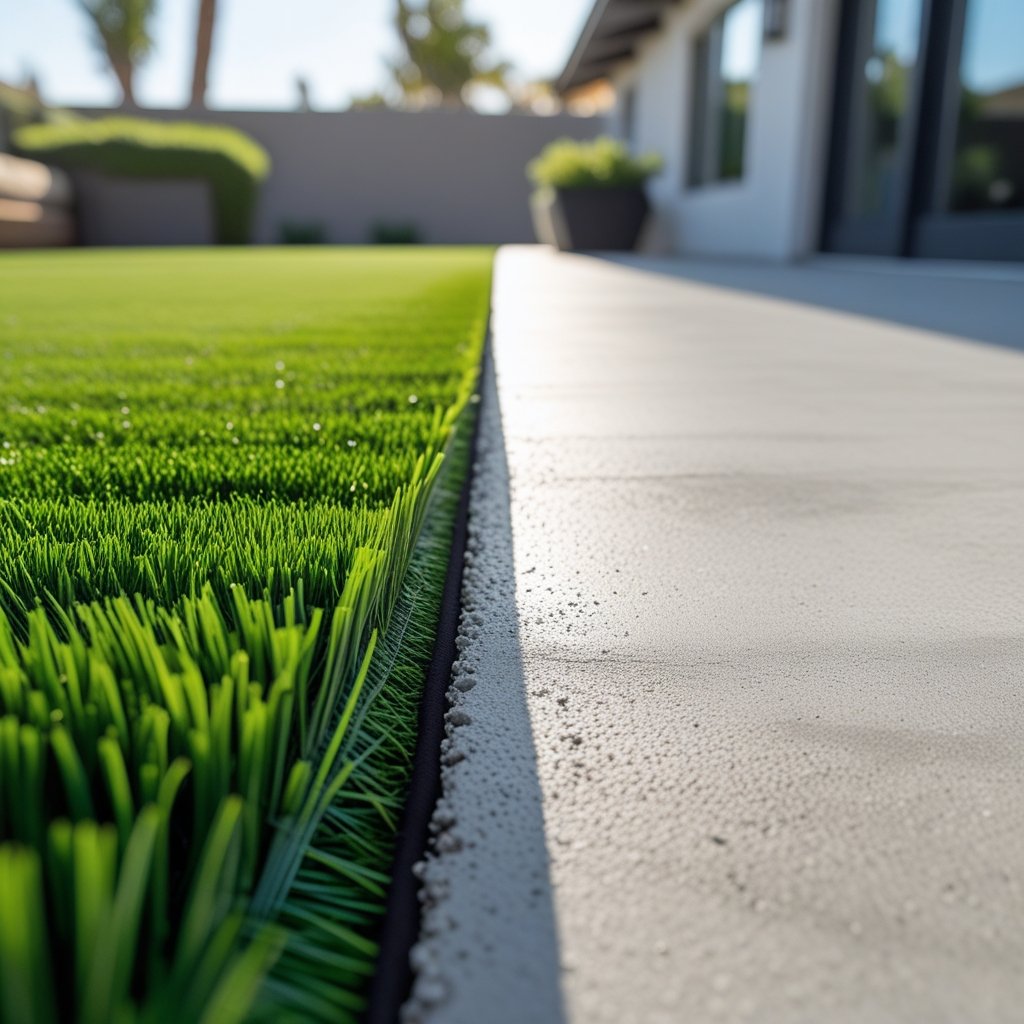
Turf edges are the transition point between your synthetic lawn and whatever surrounds it, whether that is concrete, pavers, garden beds, or natural soil. This boundary is inherently vulnerable because the turf is secured at the edge rather than held down by infill weight across its full surface. Temperature changes cause the turf material to expand and contract, creating stress at anchor points along the perimeter. Ground settling, irrigation runoff from adjacent landscaping, and foot traffic stepping on and off the turf all contribute to edge wear.
In San Diego, the dry climate causes soil to shrink during summer, potentially creating gaps between turf edges and adjacent surfaces. During the rainy season, saturated soil expands and can push against turf borders or wash sediment onto the turf surface. This seasonal cycle puts continuous stress on edge installations.
Common Edge Problems
Edge lifting is the most visible border issue. The turf edge curls upward, creating a trip hazard and an unsightly appearance. Lifting is usually caused by inadequate nailing or stapling during installation, ground movement, or the turf pulling away from its anchors as it expands and contracts with temperature changes.
Soil encroachment occurs when dirt, mulch, or gravel from adjacent landscaping migrates onto the turf surface along the edges. This material accumulates in the turf fibers, creating a dirty border that detracts from the lawn's appearance and contributes to weed growth and drainage problems in the edge zone.
Edge fraying happens when the cut edge of the turf begins to unravel. Fibers along the border loosen and the backing material may become visible. This is common where turf meets hardscaping and the edge receives regular foot traffic from people stepping on and off the surface.
Border Materials and Solutions
The type of border material surrounding your turf significantly affects edge maintenance needs. Concrete or paver borders provide a clean, stable edge that minimizes soil migration and supports the turf edge firmly. These hard borders are the lowest-maintenance option for San Diego installations.
Metal or composite landscape edging creates a defined boundary between turf and adjacent landscaping. These flexible borders follow curves and contours while keeping soil and mulch separated from the turf surface. Quality edging installed at the proper height makes a significant difference in long-term edge maintenance.
Bender board or timber borders offer a natural aesthetic but require monitoring for rot, shifting, and gaps that develop over time. These materials work well when properly installed and maintained but need replacement more frequently than metal or composite options.
Maintenance Tips for Clean Edges
Inspect your turf edges monthly, walking the entire perimeter and checking for lifting, gaps, soil migration, or fraying. Catching issues early when they are simple fixes prevents them from becoming major repairs. Use a stiff broom to sweep soil and debris away from turf edges back into adjacent landscape beds. Clear any organic debris that accumulates along borders, as decomposing material promotes weed growth and retains moisture that weakens adhesives and nailing.
Maintain soil levels in adjacent beds slightly below the turf edge height. When soil is level with or higher than the turf border, every rain event washes material onto the turf surface. Trimming back plants and ground cover that encroach on turf edges prevents root intrusion under the turf and reduces debris accumulation.
Professional Edge Repair
When edge problems develop beyond what basic maintenance can address, professional repair restores the border to proper condition. Technicians can re-secure lifted edges with fresh nails or adhesive, replace damaged border materials, install additional edging where needed, and repair frayed edges by trimming and sealing the turf material.
Professional edge repair is relatively affordable when done promptly. Neglected edge problems, however, allow water intrusion under the turf that can erode the base material and lead to much more extensive and expensive repairs. At Turf Cleaning SD, edge inspection is part of every maintenance visit because we know that clean, secure borders are essential to the overall health and appearance of your artificial lawn.