Effective Debris Removal for Artificial Turf
Of all the maintenance tasks that keep artificial turf looking and performing its best, debris removal is the most fundamental. Organic and inorganic debris that accumulates on your synthetic lawn contributes to every major turf problem, from odor and discoloration to drainage issues and fiber matting. The good news is that debris removal is straightforward, requires minimal equipment, and takes just minutes when done regularly. Here is how to do it right for your San Diego lawn.
Types of Debris That Accumulate
Understanding what ends up on your turf helps you address it effectively. Organic debris includes leaves, flower petals, seed pods, small twigs, grass clippings from neighboring properties, and pollen. This material decomposes when wet, creating a layer of organic matter in the infill that feeds mold, attracts insects, and causes discoloration. In San Diego, eucalyptus leaves and bark are particularly common and can deposit oils that stain turf fibers if left in place.
Inorganic debris includes dust, fine sand from coastal breezes, small rocks, litter, and miscellaneous items blown onto your property by wind. While this material does not decompose, it settles into the infill and contributes to compaction and drainage problems over time.
Pet waste, including solid waste and residue from urine, is a specialized category that requires its own handling approach. Solid waste should be picked up immediately and the area rinsed. Urine areas benefit from regular enzyme treatment in addition to rinsing.
The Right Tools for the Job
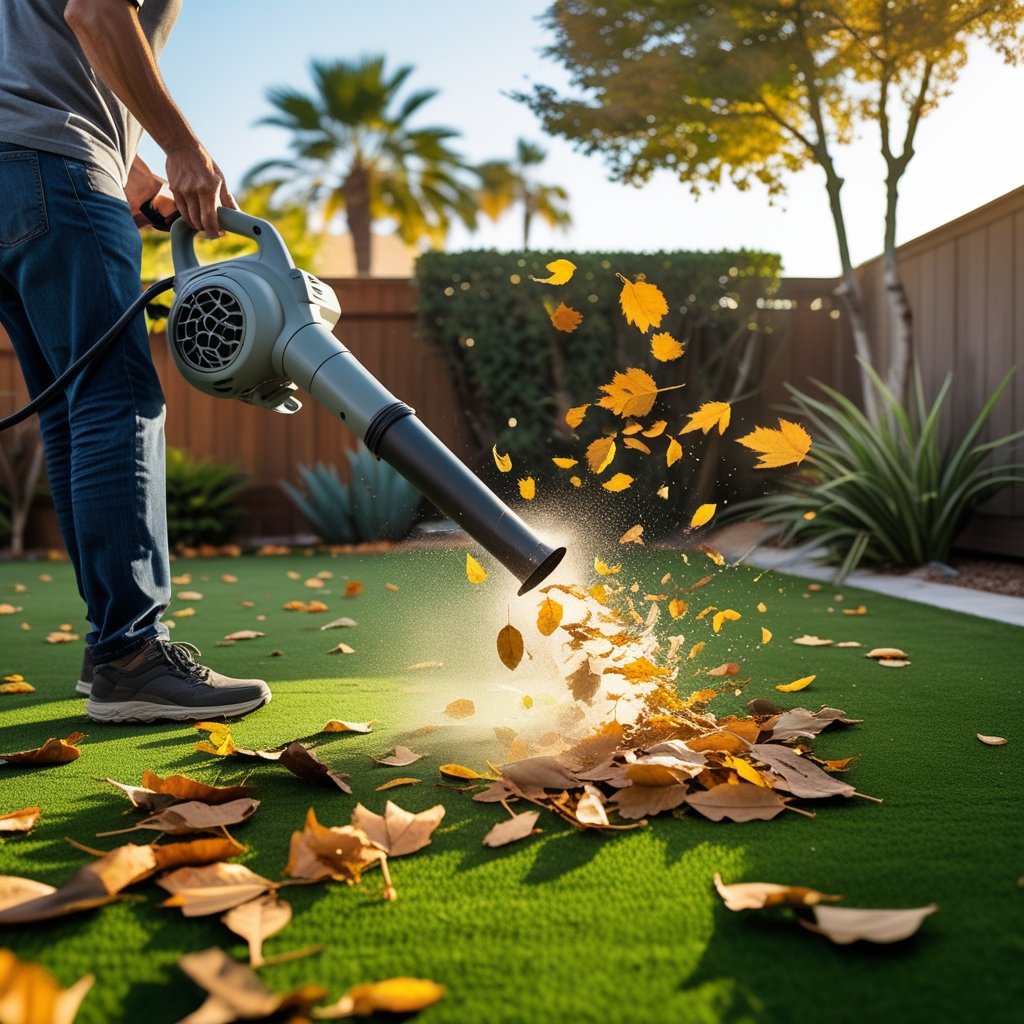
A leaf blower is the most efficient tool for routine debris removal on artificial turf. Use it on a low to medium setting to clear leaves, dust, and light debris from the surface without displacing infill. Battery-powered blowers are convenient for regular use and provide adequate power for residential turf areas. Work from one end of your turf to the other in systematic passes, directing debris toward an edge where it can be collected.
A soft-bristle push broom or a turf-specific rake is ideal for debris that a blower cannot dislodge. Choose a broom with synthetic bristles rather than natural fibers, and avoid metal-tined rakes that can damage turf fibers and backing. Brush in the direction that lifts fibers upright rather than pressing them flat.
A garden hose with a spray attachment handles fine dust and pollen that clings to fibers. A moderate spray rinses particles through the drainage system without displacing infill. For stuck-on debris like bird droppings or tree sap, a mild solution of dish soap and warm water applied directly to the spot softens the material for easy removal.
What NOT to Use
Metal rakes and garden cultivators can tear turf fibers and puncture the backing. Avoid them entirely on artificial turf. Pressure washers at full force can blast infill out of position, damage fiber attachment points, and compromise the backing material. If you must use a pressure washer, keep the nozzle at least 12 inches from the surface and use a wide fan pattern at reduced pressure.
Avoid chemical solvents, bleach concentrates, and harsh cleaning agents for debris removal. These products can discolor fibers, damage UV stabilizers, and create toxic residues that are unsafe for pets and children. Stick to mild soap and water for spot cleaning.
Establishing a Regular Schedule
Consistency is more important than intensity when it comes to debris removal. A quick five-minute blowdown once or twice a week prevents organic material from accumulating to problematic levels. This minimal time investment saves you from dealing with stains, odors, and drainage issues that result from neglected debris.
Adjust your schedule seasonally. During San Diego's fall months when deciduous trees shed their leaves, you may need to clear debris three or four times per week. Spring pollen season calls for weekly rinsing in addition to blowing. Summer is typically the easiest season, requiring less frequent attention when combined with regular professional maintenance.
After storms, barbecues, parties, or other events that generate extra debris on your turf, do a cleanup within a day. The faster you remove debris, the less chance it has to stain, decompose, or work its way deep into the infill where it becomes harder to remove.
Making debris removal part of your regular routine is the simplest and most cost-effective step you can take to protect your artificial turf investment and keep your San Diego lawn looking its best year-round.