Common Turf Cleaning Mistakes to Avoid
Artificial turf is durable and forgiving, but it is not indestructible. Well-meaning homeowners sometimes damage their synthetic lawns by using the wrong tools, applying incorrect products, or following misguided advice they found online. These mistakes can shorten your turf's lifespan, void warranties, and create problems that are expensive to repair. By learning what not to do, San Diego homeowners can protect their investment and keep their turf performing beautifully for years to come.
Using the Wrong Tools
The most common and damaging mistake is using metal tools on artificial turf. Metal rakes, wire brushes, and sharp-edged scrapers tear turf fibers, fray the edges, and can puncture the backing material. Once turf fibers are torn, they cannot be repaired, and the damage is permanent. Yet many homeowners reach for a garden rake without thinking, causing cumulative damage over months of well-intentioned maintenance.
Always use synthetic-bristle brooms, plastic rakes, and soft tools designed for artificial surfaces. When in doubt about whether a tool is safe for your turf, test it on a small, inconspicuous area first. If it snags, pulls, or scratches the fibers, do not use it. The small investment in proper turf tools pays for itself many times over by preventing damage to your much larger turf investment.
Applying Harsh Chemicals
Bleach, ammonia, undiluted industrial cleaners, and harsh chemical solvents can all damage artificial turf. Bleach discolors turf fibers and weakens the backing material. Ammonia can react with pet urine residue to create toxic fumes. Strong solvents can dissolve the adhesives that hold seams together and the coatings that protect the backing from UV damage. Despite what some internet cleaning guides suggest, these products should never be applied to synthetic turf.
Stick to products specifically designed for artificial turf, or use mild household alternatives like diluted dish soap, white vinegar solutions, and hydrogen peroxide. When using any new product for the first time, test it on a small hidden area and wait 24 hours to check for any adverse reactions before applying it to the visible surface.
Using Pressure Washers
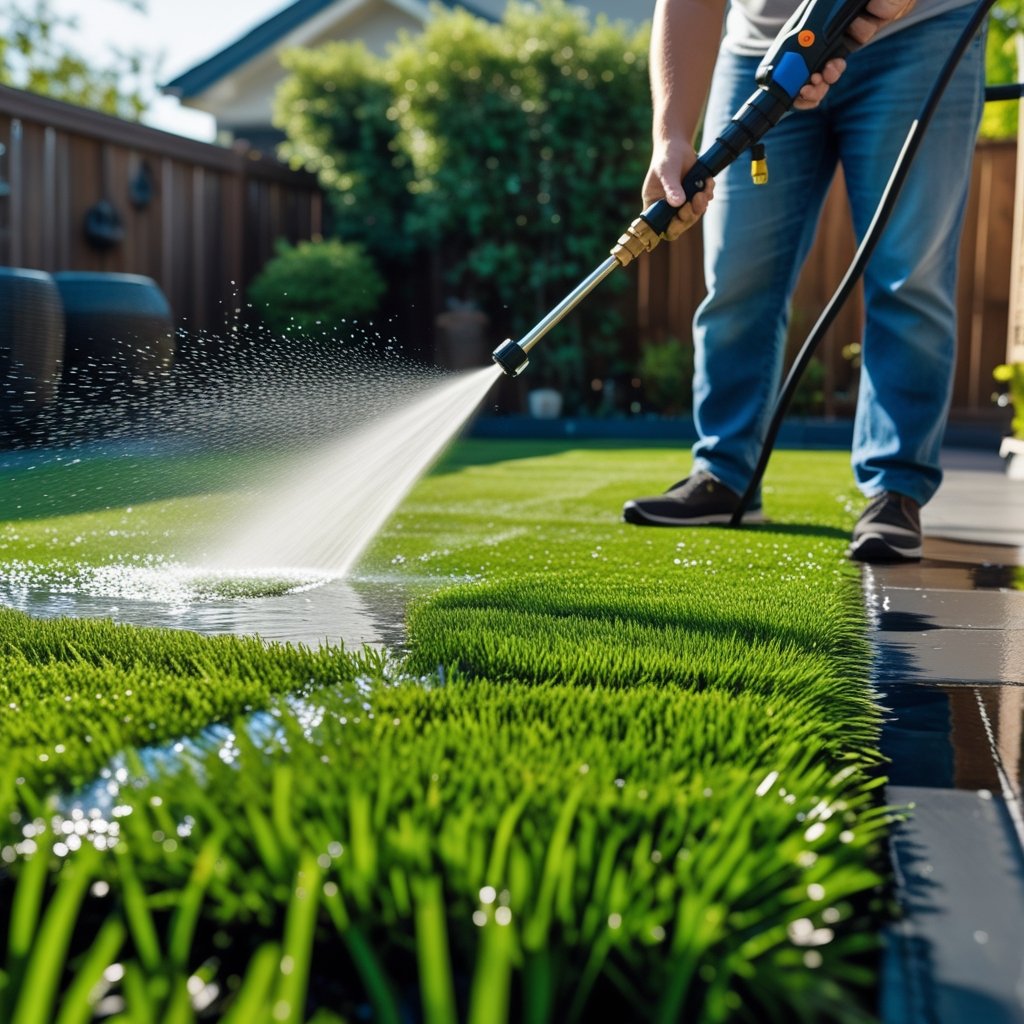
Pressure washers are one of the most destructive tools you can aim at artificial turf. The extreme water pressure blasts infill out of the turf, creating thin spots and uneven surfaces. It can separate seams, lift edges, and damage the drainage system beneath the turf. In severe cases, pressure washing can tear turf fibers and damage the backing beyond repair. Some homeowners pressure wash their turf thinking it will provide a deeper clean, but the damage far outweighs any cleaning benefit.
A standard garden hose with a spray nozzle provides all the water pressure you need for effective turf rinsing. The moderate flow cleans the surface and helps flush contaminants through the infill without displacing it. If your turf needs cleaning beyond what a garden hose can accomplish, professional cleaning with specialized equipment is the appropriate solution, not a pressure washer.
Ignoring Drainage Issues
Some homeowners focus entirely on the surface appearance of their turf while ignoring underlying drainage problems. Standing water after rain, slow-draining areas, and soggy spots are all signs of drainage issues that need attention. Ignoring these problems leads to mold growth, infill saturation, bacterial proliferation, and eventually deterioration of the turf backing and base material.
Drainage issues typically result from compacted infill, blocked drainage holes, or problems with the sub-base material. While surface cleaning can temporarily improve the appearance, only addressing the root drainage problem provides a lasting solution. If you notice water pooling on your turf more than a few hours after rain, consult a professional to diagnose and fix the drainage issue before it causes more extensive damage.
Infrequent Cleaning
Perhaps the most common mistake is simply not cleaning often enough. Some homeowners install artificial turf expecting zero maintenance and then neglect it for months or years. While turf is certainly lower maintenance than natural grass, it still requires regular attention. Neglected turf accumulates bacteria, develops odors, loses its visual appeal, and deteriorates faster than maintained turf.
At minimum, artificial turf should be rinsed weekly, brushed every one to two weeks, and professionally cleaned two to four times per year. Pet owners need to clean more frequently. This baseline maintenance schedule prevents the buildup of contaminants and wear that shortens turf life and creates unpleasant living conditions.
Skipping Professional Service
Some homeowners believe that diligent DIY maintenance eliminates the need for professional cleaning. While regular home care is extremely valuable, it cannot fully replace professional service. Consumer-level tools and products cannot reach deep into the infill the way professional equipment can. Enzyme treatments, anti-microbial applications, and power grooming require specialized knowledge and commercial-grade products that are not available to homeowners.
Think of professional turf cleaning the way you think of professional dental cleaning. Daily brushing and flossing are essential, but they do not eliminate the need for periodic professional care. The combination of consistent home maintenance and regular professional service gives your artificial turf the best chance of reaching its full expected lifespan while looking and performing its best every day.