Is Artificial Turf Safe for Cats?
While much of the conversation about pets and artificial turf centers on dogs, cat owners have their own set of questions and considerations. Whether your cat has free outdoor access, uses a supervised catio, or simply enjoys lounging on a turf-covered balcony, understanding how cats interact with synthetic grass helps you maintain both the turf and your feline companion's wellbeing. Here is what San Diego cat owners need to know.
Cat Behavior on Artificial Turf
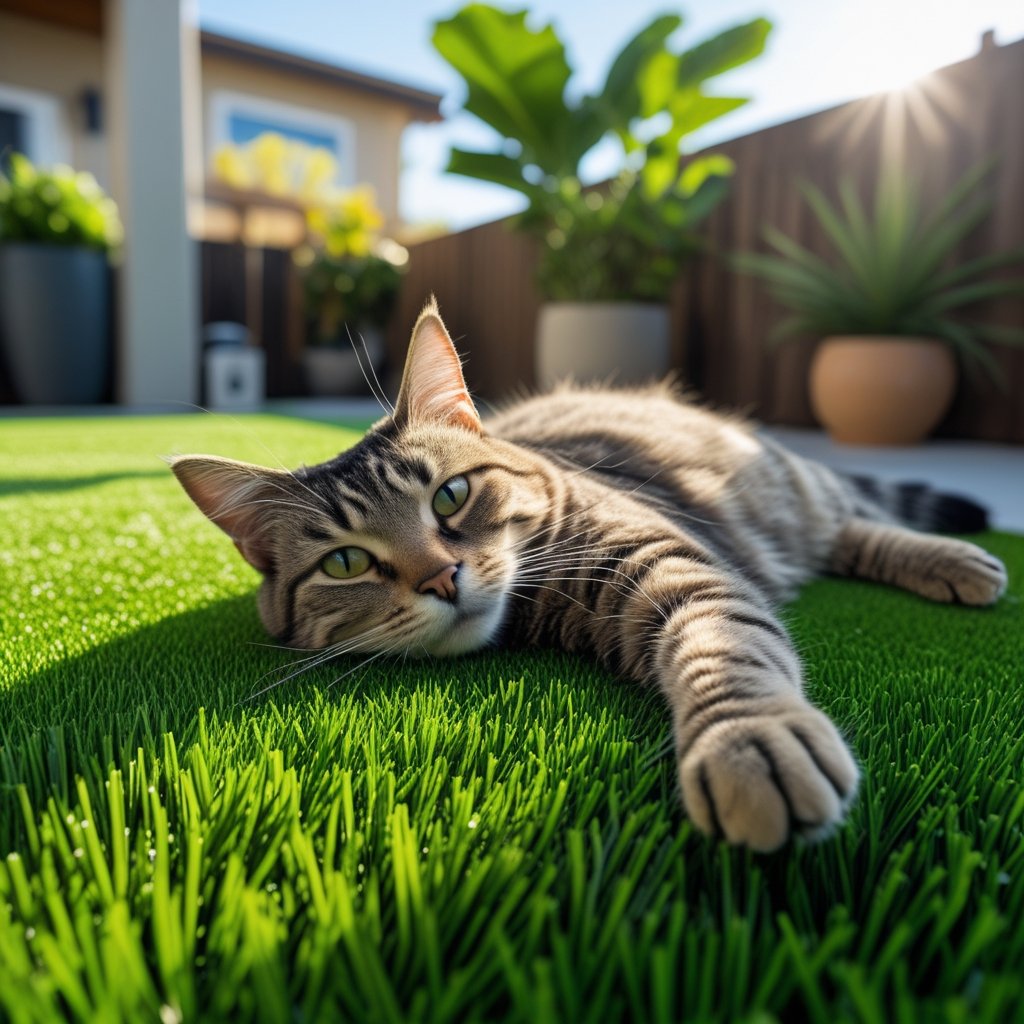
Cats interact with artificial turf differently than dogs. While dogs primarily use turf as a bathroom and play area, cats engage with it in more varied ways. Many cats enjoy the texture of synthetic grass for lying on, especially when it is warmed by San Diego sun. Cats may use turf for scratching and kneading, which their claws can do without damaging most quality turf products. Some cats eat grass as a digestive aid, and while artificial turf fibers are not a substitute, cats that attempt to chew synthetic blades should be redirected to cat grass grown specifically for this purpose.
Cats are also more likely than dogs to use specific, hidden spots for elimination. They tend to choose corners, edges, and areas near structures rather than open lawn. This concentration of waste in sheltered spots means those areas may be harder to spot during visual inspection and can develop odor problems before you notice them.
Safety Considerations
Modern artificial turf is manufactured to be non-toxic and safe for all pets, including cats. The polyethylene and polypropylene fibers used in quality turf products contain no chemicals that pose a risk to cats through contact. Infill materials including silica sand, zeolite, and antimicrobial options are also safe for feline exposure.
The primary safety concern for cats on artificial turf is heat. San Diego summers can push turf surface temperatures well above the ambient air temperature. Cats are sensitive to hot surfaces, and unlike dogs who may run across hot turf quickly, cats tend to settle in one spot. Ensure shaded areas are available on or adjacent to turf surfaces during summer months so cats can choose comfortable resting spots.
Another consideration is that cats with outdoor access may encounter turf treatments such as cleaning products or enzyme sprays. Always use pet-safe products on turf that cats access, and allow adequate drying time after any treatment before permitting cat access.
Cleaning for Cat Owners
Cat urine is more concentrated than dog urine and has a particularly strong, persistent odor. Even a single cat using outdoor turf can create noticeable odor if waste is not addressed regularly. The same enzyme-based treatments used for dog urine are effective for cat urine, but you may need more frequent application because of the higher concentration of uric acid in feline waste.
Check sheltered areas, corners, and along fences or walls where cats prefer to eliminate. These spots may not receive attention during routine surface cleaning and can develop hidden odor problems. Make these areas part of your regular inspection and cleaning routine.
Solid waste from cats should be removed promptly just as with dog waste. Cat feces can carry toxoplasma parasites that pose health risks to pregnant women and immunocompromised individuals. Wearing gloves during waste removal and thorough hand washing afterward are sensible precautions.
Outdoor Cat Enclosures with Turf
Catios and outdoor cat enclosures have become increasingly popular in San Diego, and many feature artificial turf flooring. These enclosed spaces give cats safe outdoor access while protecting local wildlife. When designing a catio with turf, ensure adequate drainage underneath since the enclosed structure may limit airflow and moisture evaporation. Use antimicrobial or zeolite infill for better odor management in these smaller, contained spaces.
Clean catio turf more frequently than open yard turf because the confined space concentrates waste and limits natural flushing from rain. Weekly enzyme treatment and daily waste removal keep catio turf fresh and pleasant for both cats and owners.
Products Safe for Cats
Cats are more sensitive to certain chemicals than dogs due to differences in liver metabolism. Avoid cleaning products containing phenols, essential oils like tea tree or peppermint, and strong chemical deodorizers. Enzyme-based cleaners are the safest choice for households with cats because they use biological processes rather than chemicals to eliminate odors. Always verify that any turf cleaning product you use is labeled as safe for cats specifically, not just pets in general, since feline sensitivities differ from canine ones. When in doubt, consult your veterinarian before introducing a new cleaning product to your cat's environment.