
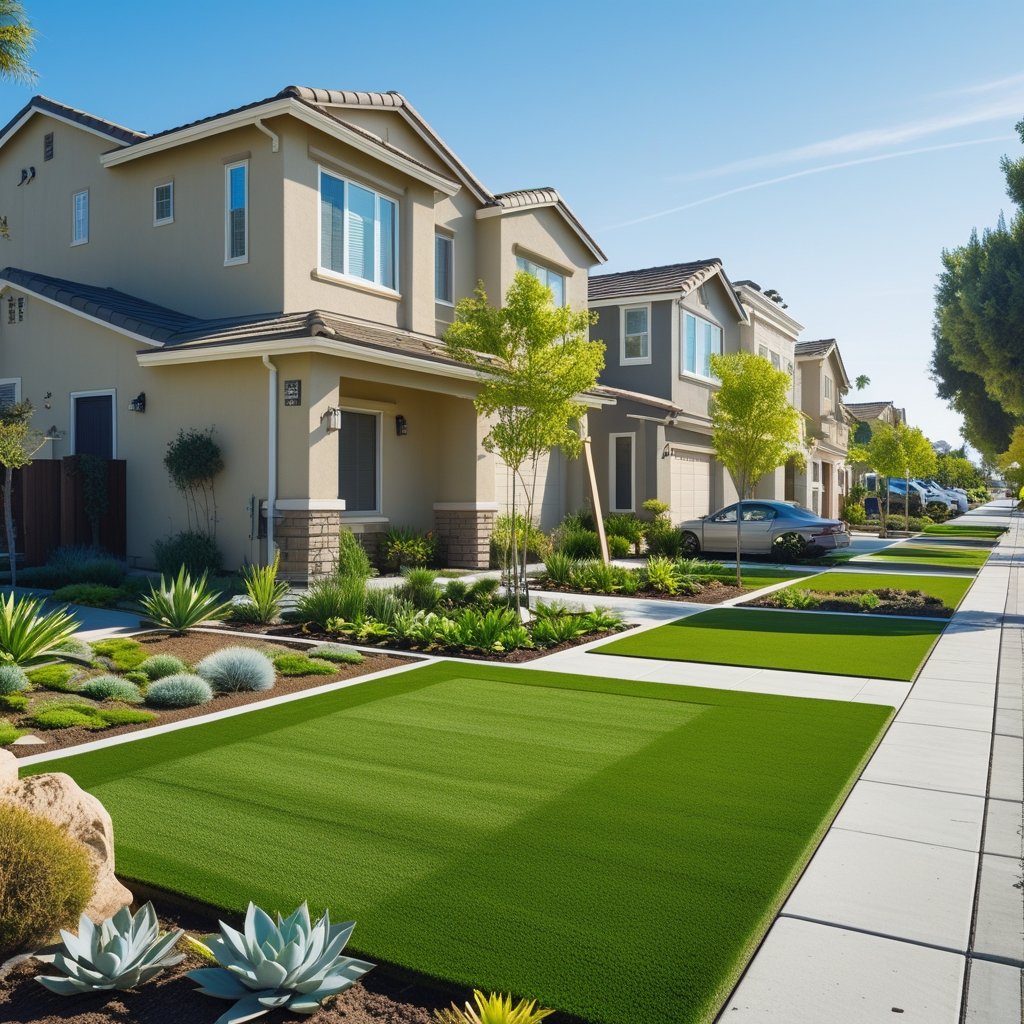
The Carbon Footprint of Artificial Turf
The environmental impact of artificial turf is a nuanced topic that deserves honest analysis. Like any manufactured product, synthetic turf has a carbon footprint associated with its production, transportation, and eventual disposal. However, when compared to the ongoing environmental costs of maintaining natural grass, the full lifecycle picture often favors artificial turf, particularly in water-stressed regions like San Diego.
Manufacturing Footprint
Artificial turf is primarily made from petroleum-based polymers including polyethylene and polypropylene. The manufacturing process requires energy for extrusion, tufting, and backing application. Transportation from manufacturing facilities to installation sites adds additional carbon emissions. A typical residential turf installation has an upfront carbon footprint that is higher than simply planting grass seed or laying sod.
It is important to acknowledge this reality rather than pretend artificial turf is carbon-free. The manufacturing process does have an environmental cost. However, this is a one-time cost that occurs at installation, while the carbon costs of natural grass maintenance recur every week, month, and year for as long as the lawn exists.
Eliminating Mowing Emissions
Gas-powered lawn mowers are surprisingly significant sources of air pollution and carbon emissions. According to the EPA, a typical gas-powered lawn mower produces as much air pollution in one hour as driving a car for roughly 45 miles. In San Diego, where lawns may need mowing 30 to 40 times per year, the annual emissions from mowing a single residential lawn are substantial.
Beyond carbon dioxide, gas mowers emit volatile organic compounds, carbon monoxide, and nitrogen oxides that contribute to smog and poor air quality. Eliminating mowing entirely by switching to artificial turf removes these emissions permanently. Over the 15 to 20 year lifespan of a synthetic lawn, the cumulative avoided emissions from mowing alone can exceed the manufacturing footprint of the turf itself.
Reduced Water Infrastructure Impact
The carbon footprint of water in San Diego is substantial. Water must be transported hundreds of miles from Northern California or the Colorado River, treated to drinking water standards, pumped through distribution systems, and ultimately processed as wastewater after use. Each of these steps requires energy and generates carbon emissions. By some estimates, the energy required to deliver and process water in Southern California exceeds 10,000 kilowatt-hours per million gallons.
Artificial turf's dramatic reduction in water consumption translates directly to reduced carbon emissions from the water infrastructure system. For a typical San Diego home saving 50,000 gallons of irrigation water annually, the associated carbon savings are meaningful and compound year after year.
Maintenance Impact Considerations
Artificial turf maintenance does have its own carbon footprint. Professional cleaning vehicles consume fuel. Cleaning equipment uses energy. Cleaning products have their own manufacturing and transportation impacts. However, these impacts are relatively small compared to the ongoing resource demands of natural grass maintenance, which includes not just mowing but also fertilizer production and application, pesticide manufacturing, irrigation system operation, and leaf blower use.
Choosing a local cleaning provider like Turf Cleaning SD minimizes the transportation component of maintenance, as service vehicles travel shorter distances. Using concentrated cleaning products and efficient equipment further reduces the per-visit environmental impact.
Lifecycle Analysis
A complete lifecycle analysis compares the total environmental impact of artificial turf from manufacturing through disposal against the cumulative impact of maintaining natural grass for the same period. Research in this area is ongoing, but studies conducted in water-stressed regions generally show that artificial turf achieves a carbon-positive break-even point within three to seven years, after which it continues to accumulate net environmental benefits.
For San Diego specifically, with its high water costs, year-round mowing season, and imported water supply, the lifecycle analysis tends to favor artificial turf more strongly than it would in regions with abundant rainfall and shorter growing seasons. The decision to install artificial turf in San Diego is not just a landscaping choice; it is, on balance, an environmentally responsible one.