Between-Service Turf Care Tips
Professional turf cleaning is the cornerstone of good artificial turf maintenance, but what you do between those service visits plays a critical role in the overall health and appearance of your synthetic lawn. San Diego homeowners who practice consistent between-service care find that their turf looks better, lasts longer, and requires fewer emergency treatments. The good news is that effective between-service care does not require a lot of time or expensive products. A few simple habits can make a significant difference.
Daily Tasks That Make a Difference
The most impactful daily task is picking up pet waste immediately. Fresh pet waste is far easier to clean than waste that has been sitting in the sun for hours, and prompt removal prevents bacteria from multiplying in the infill. After picking up solid waste, give the spot a quick rinse with your garden hose to dilute any residue. This two-minute daily habit does more for your turf than almost any other single action.
A quick visual scan of your turf surface each day helps you catch problems early. Look for any debris that has blown in, food scraps that may have been dropped, or unusual discoloration that could indicate a developing issue. Removing debris as you notice it prevents accumulation and keeps your turf looking tidy with minimal effort. Most homeowners spend less than five minutes per day on these daily tasks.
Weekly Maintenance Routine
Once a week, give your turf a more thorough once-over. Use a leaf blower or stiff-bristle broom to clear the entire surface of accumulated debris. Follow this with a general rinse of the whole turf area, paying extra attention to pet zones, shaded areas, and high-traffic paths. This weekly rinse helps flush surface contaminants before they work deep into the infill.
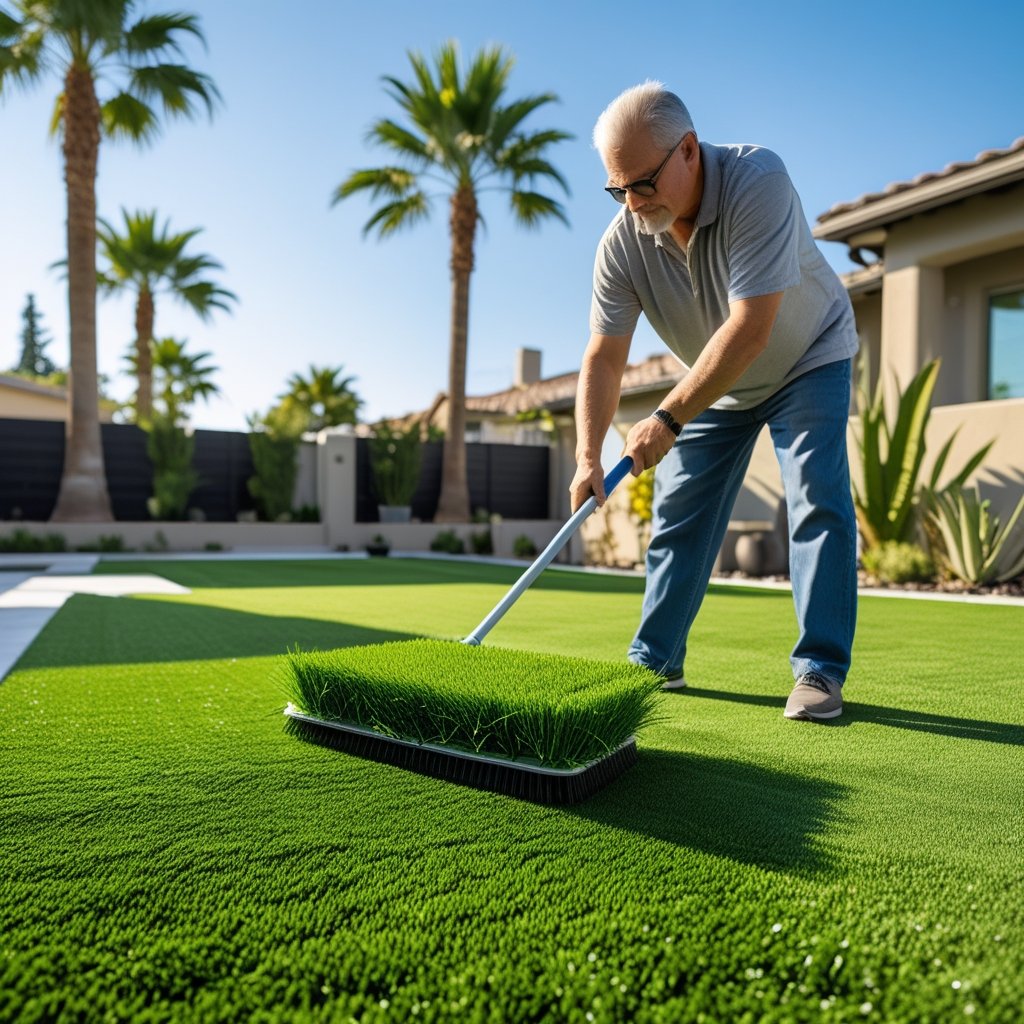
Weekly brushing of high-traffic areas keeps the turf fibers upright and prevents matting. Use a stiff-bristle push broom and brush against the grain of the fibers. This lifts the fibers back to their natural position and redistributes surface-level infill that may have shifted during the week. Focus on areas near doors, along pathways, and in play zones where foot traffic is concentrated.
Essential Tools for Between-Service Care
You do not need a lot of equipment to maintain your turf between professional visits. A garden hose with a spray nozzle is your most important tool, providing the water pressure needed for effective rinsing. A stiff-bristle push broom is essential for grooming and debris removal. A leaf blower helps clear larger debris quickly. A plastic rake is useful for removing leaves and organic material without damaging turf fibers.
Keep a spray bottle filled with a mild cleaning solution (water with a small amount of dish soap or white vinegar) for spot-treating stains and spills as they happen. Having these supplies readily accessible near your turf area makes it easy to address issues promptly rather than putting them off until later. The convenience of having the right tools at hand directly translates to more consistent maintenance habits.
What to Avoid
Between-service care is also about knowing what not to do. Never use a metal rake, wire brush, or other sharp tools on your turf, as these can tear fibers and damage the backing. Avoid pressure washers, which can displace infill, separate seams, and damage the drainage system. Do not use household chemicals like bleach, ammonia, or harsh chemical cleaners on the turf surface, as these can damage fibers and leave unsafe residues.
Avoid placing hot items directly on the turf surface. Barbecue grills, fire pits, cigarettes, and hot coals can melt or permanently damage synthetic fibers. If you use a grill on or near your turf, place a protective mat or pad beneath it. Similarly, be cautious with sharp-edged furniture or equipment that could puncture or cut the turf surface.
When to Call the Professionals
Between-service care is meant to maintain the results of professional cleaning, not replace it. Certain situations warrant calling your turf cleaning professional rather than attempting a DIY fix. Persistent odors that do not respond to rinsing suggest bacterial buildup deep in the infill. Visible mold or mildew growth requires professional anti-microbial treatment. Drainage problems, significant infill displacement, seam separation, or physical damage all need professional attention.
If you notice any of these issues, do not wait for your next scheduled service. Early professional intervention prevents small problems from becoming large, expensive ones. A good between-service routine keeps your turf in great shape day to day, but professional expertise handles the deeper maintenance that preserves your turf's long-term health and value.