Artificial Turf Infill Care: What San Diego Homeowners Need to Know
When most people think about artificial turf, they focus on the green blades that create that attractive lawn appearance. But beneath those fibers lies a critical component that determines how your turf looks, feels, performs, and drains. That component is infill, and understanding how to care for it is essential for every San Diego homeowner with synthetic grass.
What Is Infill and Why Does It Matter?
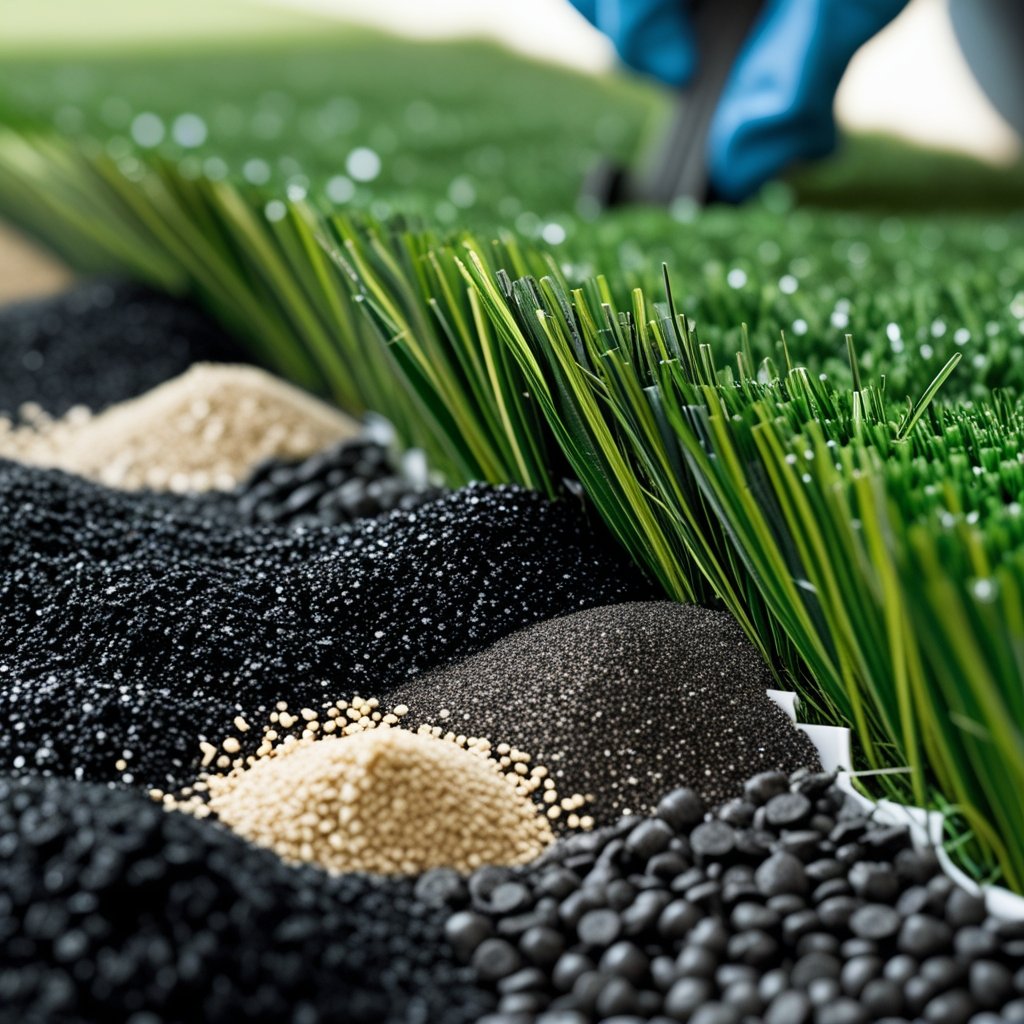
Infill is the granular material spread between the turf fibers after installation. It serves multiple purposes. Infill weighs down the turf to keep it in place, supports the fibers in an upright position, provides cushioning underfoot, aids in drainage, and helps regulate surface temperature. Without proper infill, your turf would feel hard, look flat, drain poorly, and shift under use.
Think of infill as the foundation of your artificial lawn. Just as a building needs a solid foundation, your turf needs well-maintained infill to perform at its best.
Types of Infill Used in San Diego
Several types of infill are commonly used in San Diego installations, each with its own characteristics and maintenance requirements.
Silica sand is the most common and affordable option. It provides good weight and drainage and works well for general residential applications. However, silica sand does not have odor-fighting properties, which makes it less ideal for pet owners.
Zeolite infill is a natural mineral that absorbs ammonia and other odor-causing compounds. It is popular among pet owners because it actively reduces urine odors between cleanings. Zeolite needs periodic replacement as its absorption capacity diminishes over time.
Antimicrobial infill is treated with agents that inhibit bacterial growth. This type is excellent for households with children and pets because it adds an extra layer of hygiene to the turf system. It costs more upfront but can reduce the frequency of deep cleaning needed.
Coated sand products combine the affordability of silica with antimicrobial or odor-absorbing coatings. These offer a middle-ground solution for homeowners who want enhanced performance without the premium price of specialty infill.
How Infill Affects Drainage
Properly maintained infill allows water to pass through the turf surface and into the drainage layer below. Over time, infill can become compacted due to foot traffic, pet activity, and natural settling. Compacted infill restricts water flow and can lead to puddling, slow drainage, and standing water after rain. In San Diego, where winter storms can dump significant rainfall in short periods, good drainage is essential to prevent water damage and mold growth.
Regular power brushing helps decompact infill and maintain proper drainage. If you notice water sitting on your turf surface longer than usual after a rain, compacted infill is likely the culprit.
How Infill Affects Odor
For pet owners, infill plays a direct role in odor management. Pet urine flows through the fibers and into the infill layer, where uric acid crystals can accumulate. Standard silica sand does nothing to neutralize these compounds. Zeolite and antimicrobial infills help, but they are not a complete solution on their own. Professional enzyme treatments that penetrate the infill layer are still necessary to break down uric acid buildup.
When to Replenish Your Infill
Infill naturally depletes over time through wind displacement, water runoff during heavy rains, and displacement from activity. Most San Diego turf installations need infill replenishment every two to three years, though high-traffic areas and pet zones may need it sooner. Signs that your infill needs attention include visible turf backing showing through, fibers that will not stand upright even after brushing, a hard or uneven surface feel, and increased wrinkling or shifting of the turf.
A professional turf maintenance provider can assess your infill levels and recommend the right type and quantity for your specific turf system. At Turf Cleaning SD, infill assessment is part of every maintenance visit, so you always know the condition of your turf's foundation.
Maintaining Your Infill
Between professional service visits, you can help maintain your infill by rinsing the turf regularly to prevent surface compaction, removing pet waste promptly to reduce odor buildup, and using a soft-bristle broom to lightly brush high-traffic areas. Avoid using a garden hose at full blast directly into the infill, as this can displace material and create uneven spots. A gentle rinse is all that is needed for routine maintenance.